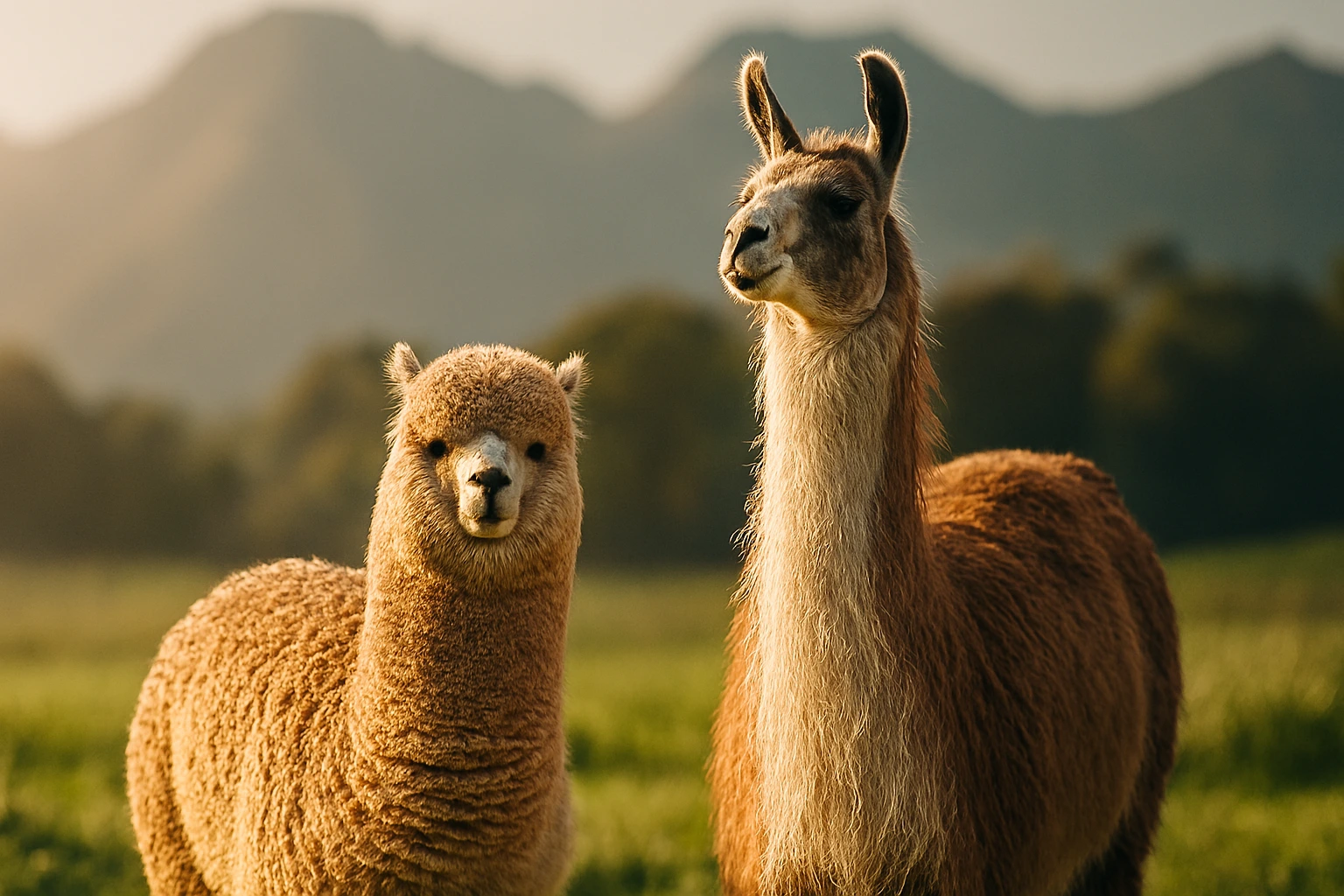
When people think of fluffy, long-necked animals from South America, they often mix up alpacas and llamas. While they look similar and belong to the camelid family, the truth is that alpacas vs llamas are quite different in appearance, behavior, and purpose. If you’ve ever wondered what is the difference between an alpaca and a llama, this guide explains everything in a simple and beginner-friendly way.
Whether you’re planning to visit a farm, buy wool products, or choose the right animal for livestock, understanding the difference between llama and alpaca helps you make better decisions.
Origins and Background
Both alpacas and llamas come from the Andes Mountains, mainly in Peru, Bolivia, and Chile. They’ve been domesticated for thousands of years but were bred for different purposes. This history explains many of the differences you see today in the llama alpaca difference.
Physical Differences Between Alpacas and Llamas
One of the biggest questions people ask is: llama vs alpaca — which one is bigger?
Size
- Llamas: Taller and heavier. Adult llamas weigh 250–400 lbs.
- Alpacas: Smaller and lighter, usually 100–175 lbs.
Face Shape
- Llamas: Have long, banana-shaped ears and a longer face.
- Alpacas: Have short, spear-shaped ears and a cute, round “teddy-bear” face.
Fur Type
- Llamas: Coarser wool, often used for ropes or blankets.
- Alpacas: Soft, luxurious fiber used for clothing—similar to cashmere.
These differences make it easier to identify llamas vs alpacas even from a distance.
Behavior and Personality: Alpacas vs Llamas
Although they are related, they act differently.
Temperament
- Llamas: More independent, confident, and sometimes protective.
- Alpacas: Shy, gentle, and prefer staying in groups.
Spitting
Both animals can spit, but:
- Llamas spit more often, usually to show dominance.
- Alpacas spit less and mostly when stressed.
Trainability
- Llamas can be trained as pack animals (carry loads).
- Alpacas are calmer but not used for carrying loads.
These behavior traits highlight the core alpacas vs llamas difference that farmers consider before choosing one.
Uses: What Are They Good For?
Another key aspect of llama vs alpaca comparisons is their purpose.
Llama Uses
- Carrying loads on long mountain trails
- Guarding sheep or goats
- Producing coarse fiber
- Therapy animals
Alpaca Uses
- Producing high-quality wool
- Farm pets
- Eco-friendly livestock
- Tourism and petting zoos
If you’ve ever wondered about the difference between llama and alpaca in everyday life, their practical uses show it clearly.
Diet and Care Needs
Both animals eat grass, hay, and simple grains. However:
- Llamas need more space because of their size.
- Alpacas thrive in herds and do best in groups of 3 or more.
Good shelter and regular shearing keep both species healthy.
Which One Is Better for Farms or Pets?
Choosing between llamas vs alpacas depends on your goals.
Pick a Llama If You Want:
- A strong pack animal
- A livestock guardian
- A confident and alert animal
- Lower-maintenance grooming
Pick an Alpaca If You Want:
- Soft, high-quality wool production
- Gentle pets
- Cute farm animals
- Better herd behavior
This summary helps answer what is the difference between an alpaca and a llama in simple terms.
Comparison Table: Alpaca vs Llama
| Feature | Alpaca | Llama |
|---|---|---|
| Size | Small (100–175 lbs) | Large (250–400 lbs) |
| Ears | Short, spear-shaped | Long, banana-shaped |
| Fur | Soft, fine wool | Coarse, rough fiber |
| Behavior | Shy, calm | Confident, protective |
| Uses | Wool, pets | Carry loads, guard animals |
| Face | Rounded, cute | Long, narrow |
This easy visual breakdown shows the clear llama alpaca difference at a glance.
Why People Confuse Them
Even though the difference between llama and alpaca is clear, most people confuse them because:
- Both are camelids
- They share similar colors
- They live in the same regions
- They look similar to casual observers
Learning these details makes it easier to identify alpacas vs llamas instantly.
Conclusion
In the debate of alpaca vs llama, the two animals are related but unique. Alpacas are smaller, softer, and gentler—perfect for wool and farm companionship. Llamas are bigger, stronger, and more confident, ideal for carrying loads and protecting livestock.
Now that you understand the llama vs alpaca differences clearly, you can easily tell these charming animals apart and appreciate both for their special qualities.
FAQs
1. What is the main difference between an alpaca and a llama?
The main difference is size and purpose. Llamas are larger and used as pack animals, while alpacas are smaller and bred mainly for soft, high-quality wool.
2. Are alpacas or llamas friendlier?
Alpacas are generally calmer and shy, while llamas are more confident and can act as protective guardians.
3. Which animal produces better wool?
Alpacas produce much softer, finer, and more valuable wool compared to llamas.
4. Do alpacas and llamas spit?
Both can spit, but llamas spit more often, usually to show dominance. Alpacas spit less frequently.
5. Can alpacas and llamas live together?
Yes, they can live together peacefully, especially in a farm or herd environment.