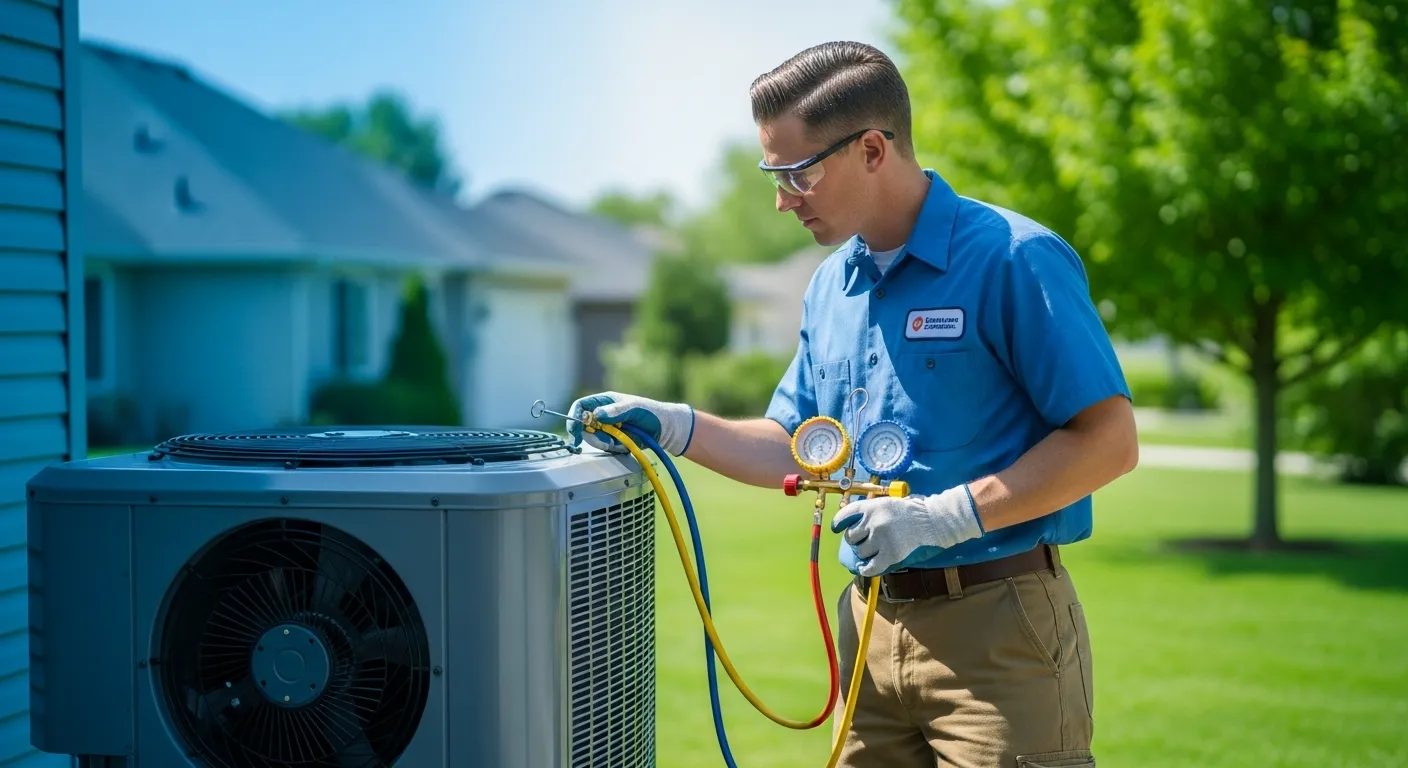
Finding a reliable substitute for Freon is rapidly becoming the most critical maintenance decision for homeowners and facility managers operating older HVAC systems. For decades, Chlorodifluoromethane (commonly known as R-22 or Freon) was the lifeblood of air conditioning, but with the complete global phase-out mandated by environmental regulations, supplies have dwindled, and prices have skyrocketed.
If your air conditioner was built before 2010, you are likely facing a dilemma: do you pay exorbitant prices for the remaining stocks of R-22, invest in a retrofit with a modern alternative, or replace the system entirely? This isn’t just about keeping cool—it’s about navigating a complex landscape of EPA regulations, chemical compatibility, and long-term efficiency.
In this comprehensive guide, we will explore everything you need to know about the transition away from R-22. We will break down the top contenders for replacement, analyze the implications of the American Innovation and Manufacturing (AIM) Act, and look ahead to the next generation of A2L refrigerants like R-454B. Whether you are a homeowner trying to extend the life of your central air unit or a technician looking for the latest data on R-410A phase-out strategies, this article serves as your ultimate resource.
The Urgency of the R-22 Phase Out
The urgency to find a substitute stems from the Montreal Protocol, an international treaty designed to protect the ozone layer. R-22 is a hydrochlorofluorocarbon (HCFC) with high ozone-depleting potential.
As of January 1, 2020, the production and import of R-22 became illegal in the United States. This means the only R-22 available today is reclaimed or recycled stock, which drives the cost up significantly every single year.
Understanding this scarcity is crucial. You aren’t just looking for a new gas—you are looking for a strategy to future-proof your home’s climate control. Relying on dwindling stocks of R-22 is a gamble that gets more expensive by the day.
Consequently, the HVAC industry has developed several Freon alternatives that mimic the thermodynamic properties of R-22 without the environmental baggage. However, not all substitutes are created equal, and using the wrong one can damage your compressor or void your warranty.
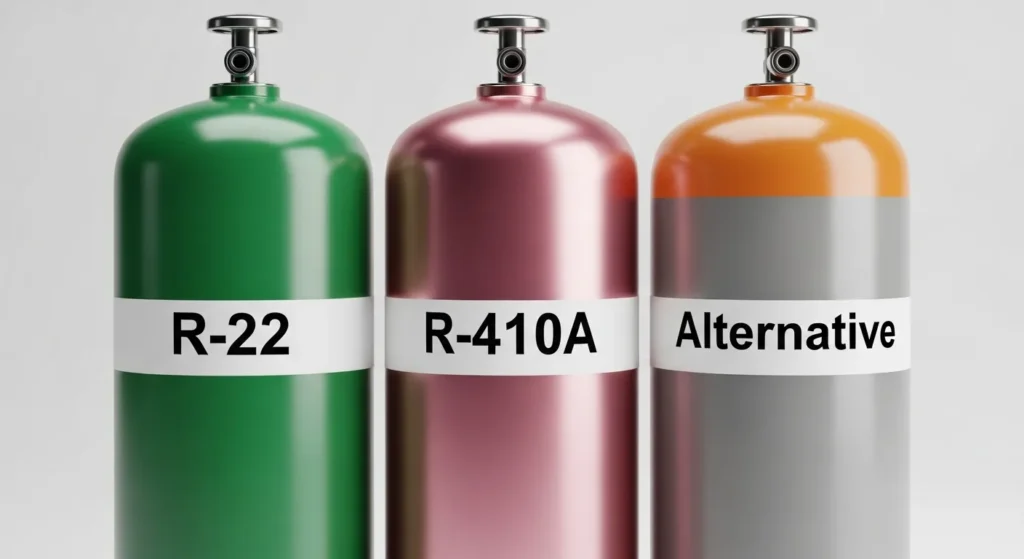
It is also important to note that the industry is currently undergoing a secondary transition. While we are moving away from R-22, the industry is also preparing for the 2025 refrigerant regulations that will limit the use of high-GWP (Global Warming Potential) hydrofluorocarbons (HFCs) like R-410A. This puts us in a unique position where we must choose alternatives that are not only compatible with current hardware but also align with future environmental standards.
Top Contenders: What Replaces R-22?
When discussing a substitute for Freon, we generally categorize options into two buckets: “retrofit” refrigerants (drop-ins) and “new system” refrigerants. For existing R-22 systems, you cannot simply pour in R-410A because the operating pressures are vastly different, and the oils are incompatible. Instead, you need specific retrofit blends.
R-407C: The Commercial Standard
R-407C is one of the most widely used replacements for R-22 in residential and commercial air conditioning applications. It is a blend of HFC-32, HFC-125, and HFC-134a. Its pressure-temperature characteristics are very similar to R-22, making it an excellent candidate for retrofits.
However, there is a catch: R-407C requires Polyolester (POE) oil. Since most older R-22 systems use mineral oil, a technician must perform an oil change—removing the mineral oil and replacing it with POE—before charging the system with R-407C. While labor-intensive, this is a proven solution for extending the life of robust equipment.
MO99 (R-438A): The “No Oil Change” Solution
For many homeowners, MO99 refrigerant (R-438A) is the holy grail of retrofits. It was specifically engineered to be compatible with both mineral oil and POE oil. This means a technician can recover the R-22 and charge the system with MO99 without the costly and time-consuming process of flushing the oil lines.
It provides similar cooling capacity and energy efficiency to R-22, making it a cost-effective R-22 replacement for residential split systems.
R-421A: A Future-Forward Retrofit
R-421A is another non-ozone-depleting HFC refrigerant replacement for R-22. Like MO99, it does not require an oil change for most systems, as it works with mineral oil. It is a two-component blend, which simplifies the charging process compared to more complex blends.
It is gaining popularity because it closely matches the performance curve of R-22, ensuring that your AC unit cools your home just as effectively as it did before.
The Next Generation: R-454B and R-32
If you decide to replace your system entirely rather than retrofit, you will encounter a new class of refrigerants. The industry is pivoting away from R-410A (Puron) due to its high Global Warming Potential. The American Innovation and Manufacturing (AIM) Act mandates a phasedown of HFCs, pushing manufacturers toward A2L refrigerants.
- R-32 Refrigerant: A single-component refrigerant that is efficiently recycled and has a significantly lower GWP than R-410A. It is widely used in Asia and Europe and is making significant inroads in the US market.
- R-454B: This is becoming the new standard for many American manufacturers like Carrier and Trane. It has an even lower GWP and is known for its excellent performance in high-ambient temperatures.
These new coolants are classified as “mildly flammable” (A2L), which sounds alarming but simply means they require specific safety protocols during installation and service. Modern systems are designed with sensors and shut-offs to ensure absolute safety.
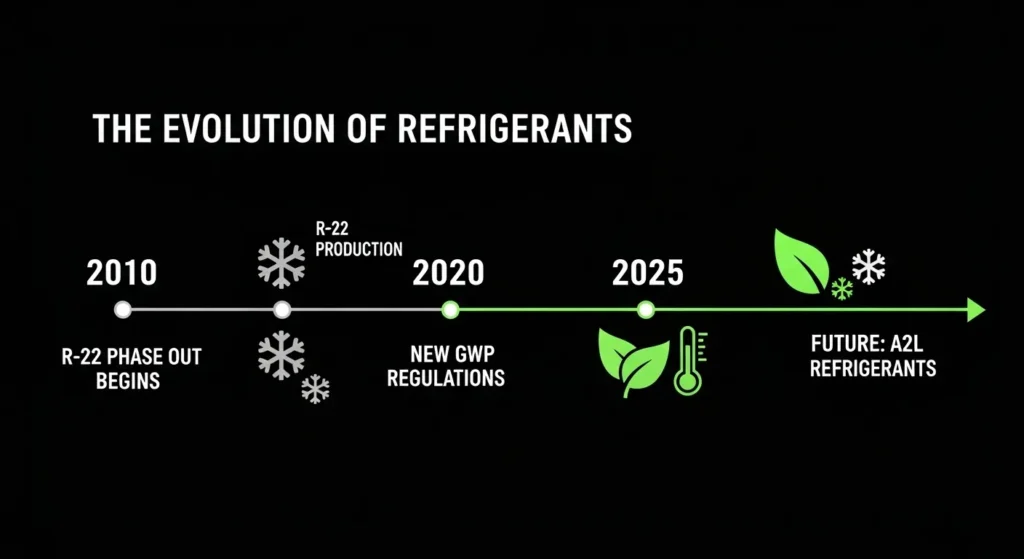
Understanding this timeline helps you realize that investing in an R-410A system right now might mean buying technology that is already on its way out. Asking your installer about R-32 or R-454B–ready units could save you from future obsolescence.
Practical Guide: How to Switch to a Freon Substitute
Transitioning your HVAC system to a substitute for Freon is not a DIY job. It involves handling high-pressure gases and hazardous chemicals. However, as a homeowner, you need to know the steps to ensure you aren’t being overcharged or sold a solution that won’t last.
Step 1: System Assessment
Before agreeing to a retrofit, have your technician perform a comprehensive leak test. If your system lost its R-22 charge due to a massive leak in the evaporator coil, simply filling it with a substitute won’t solve the problem. The leak must be repaired first.
If the system is over 15 years old and the coil is corroded, a retrofit might be throwing good money after bad. Check out our guide on AC repair vs. replacement to help weigh these factors.
Step 2: Choose the Right Refrigerant
Discuss the options with your technician:
- If they suggest R-407C, ask about the cost of the oil change.
- If they suggest MO99 or R-421A, confirm that they have experience with these specific blends.
Ensure they are not using unapproved “cocktails” or flammable hydrocarbon refrigerants (like propane) in a system not designed for them, as this is illegal and dangerous.
Step 3: The Retrofit Process
A proper retrofit involves:
- Recovering the remaining R-22 into a dedicated cylinder (it cannot be vented into the atmosphere).
- Replacing the filter drier—a crucial component that removes moisture.
- Replacing seals and O-rings if needed, as different refrigerants affect rubber differently.
- Evacuating the system to a deep vacuum to remove air and moisture before charging with the new Freon alternative.
Step 4: Labeling and Documentation
Once the job is done, the unit MUST be clearly labeled with:
- The name of the new refrigerant
- The type of oil used
This is critical for future service. If another technician accidentally mixes R-22 with the substitute, the entire mixture becomes useless waste—and it can damage the compressor.
My Expert Opinion
In my 15 years in the HVAC industry, I have seen every refrigerant transition—from the panic of the R-12 phase-out to the current R-22 scarcity. Here is my honest, unfiltered take:
Most homeowners are terrified of retrofits because they are often undersold on the complexity and oversold on the “drop-in” simplicity.
While products like MO99 are marketed as “drop-in” replacements, I frankly dislike that term. There is no such thing as a true “drop-in” where you just top off a system. Mixing refrigerants is a cardinal sin in thermodynamics. The chemical compositions fight each other, leading to inefficient cooling and eventual compressor death.
Furthermore, I believe that if your system is old enough to use R-22, you need to look very hard at the math of a replacement versus a retrofit. Yes, a new system is expensive, especially with the new efficiency standards. But retrofitting a 20-year-old compressor is like putting a new engine in a car with 300,000 miles on the transmission. You might get cold air for another season or two, but the mechanical wear and tear is already there.
My advice?
If the repair cost (including the retrofit) approaches 50% of the cost of a new unit, bite the bullet and upgrade. You will get a warranty, lower energy bills, and peace of mind.
However, if you are just nursing a system along for one last summer before a renovation or a move, MO99 is a fantastic, viable band-aid.
FAQ: Common Questions About Freon Substitutes
Q: Is it illegal to use R-22 in my home AC?
No, it is not illegal to use R-22. It is only illegal to produce or import it. You can continue to use your system as long as it runs. You are simply limited by the availability and cost of the remaining R-22 supply.
Q: Can I mix R-22 with a substitute like R-410A?
Absolutely not. R-410A operates at pressures nearly double that of R-22. Putting R-410A into an R-22 system will likely cause the compressor to burst or the lines to rupture. Even mixing compatible retrofits like R-22 and MO99 is bad practice and results in unpredictable cooling performance.
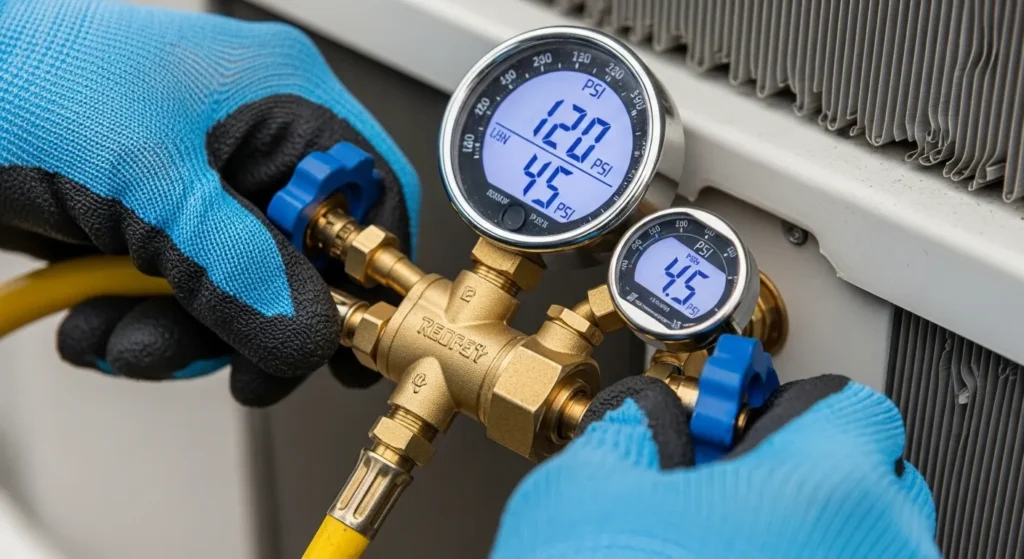
Always ensure your system is completely evacuated before adding a new refrigerant.
Q: Will a substitute refrigerant cool as well as Freon?
Generally, yes. Most modern Freon alternatives like MO99 and R-421A are designed to come within 3–5% of the cooling capacity of R-22. In some cases, you might notice a very slight difference on extremely hot days, but for the vast majority of applications, the difference is imperceptible to the occupants.
Q: How much does a retrofit cost compared to R-22?
While prices vary by region, R-22 can cost upwards of $150–$200 per pound. Substitutes generally cost significantly less—often 50–70% cheaper per pound. However, remember to factor in the labor cost of recovering the old refrigerant and installing the new filter drier.
Q: What is the best eco-friendly AC refrigerant for 2025?
The industry is moving toward R-454B and R-32. These have low Global Warming Potential and are the designated successors to R-410A. If you are buying a new system, ask for these to ensure long-term environmental compliance and parts availability.
Conclusion
Finding a substitute for Freon is more than just a chemical swap—it is a strategic decision for the comfort and value of your property.
Whether you choose to extend the life of your current unit with a retrofit blend like MO99 or R-421A, or you decide to upgrade to a modern system utilizing A2L refrigerants, being informed is your best defense against rising costs.
The era of R-22 is undeniably over—but with the right knowledge and a trusted technician, you can navigate the transition smoothly.
Don’t wait for your AC to fail in the middle of a heatwave—assess your options today and choose the path that offers the best balance of cost, efficiency, and longevity.
For more tips on keeping your system running efficiently, read our article on essential HVAC maintenance.