If you’ve been browsing social media or wandering through high-end grocery stores lately, you’ve likely seen a vibrant, deep-violet vegetable stealing the spotlight. The purple sweet potato is more than just a colorful trend; it is a nutritional powerhouse and a versatile ingredient that can transform any meal into a gourmet experience. Whether you are looking for healthy recipes or want to add a pop of color to your plate, this guide will tell you everything you need to know about this “superfood” tuber.
What is a Purple Sweet Potato?
The purple sweet potato belongs to the morning glory family and is distinct from the common orange-fleshed sweet potato. There are several varieties, including the Stokes Purple (grown in the US), the Okinawan (popular in Hawaii and Japan), and the Murasaki (which has purple skin but white flesh).
What makes them truly special is their deep purple color, which comes from high levels of anthocyanins—the same antioxidants found in blueberries and blackberries. Because of their dense texture and wine-like, nutty sweetness, they have become a staple in modern plant-based meals and vibrant dessert recipes.
Sweet Potato Nutrition & Benefits
Before we get into the kitchen, let’s look at why these tubers are so good for you.
Purple Sweet Potato Nutrition
The purple sweet potato nutrition profile is impressive. They are rich in Vitamin C, Vitamin A (as beta-carotene), fiber, and potassium. Unlike white potatoes, they have a lower glycemic index, meaning they won’t cause your blood sugar to spike as rapidly.
Sweet Purple Potato Calories
If you are tracking your intake, you’ll be pleased to know that sweet purple potato calories are quite manageable. On average, a medium-sized (130g) purple sweet potato contains approximately 120–140 calories. These calories come from complex carbohydrates that provide sustained energy throughout the day.
Purple Sweet Potatoes Benefits for Health
The purple sweet potatoes benefits extend beyond simple nutrition.
- High in Antioxidants: The anthocyanins help reduce inflammation and may protect against chronic diseases.
- Gut Health: The high fiber content supports a healthy digestive system.
- Heart Health: Potassium helps regulate blood pressure.
- Immune Support: High levels of Vitamin A and C help bolster your body’s natural defenses.
3. Main Recipe: How to Cook Purple Sweet Potatoes
Learning how to cook purple sweet potatoes is slightly different than cooking orange ones because they are denser and have a lower moisture content. Here is the master method for preparing them.
Ingredients:
- 2-3 medium purple sweet potatoes
- 1 tbsp olive oil or coconut oil
- Salt and pepper to taste
- Optional: Fresh rosemary or cinnamon
Master Step-by-Step Instructions:
1. Roasted (The Best for Flavor)
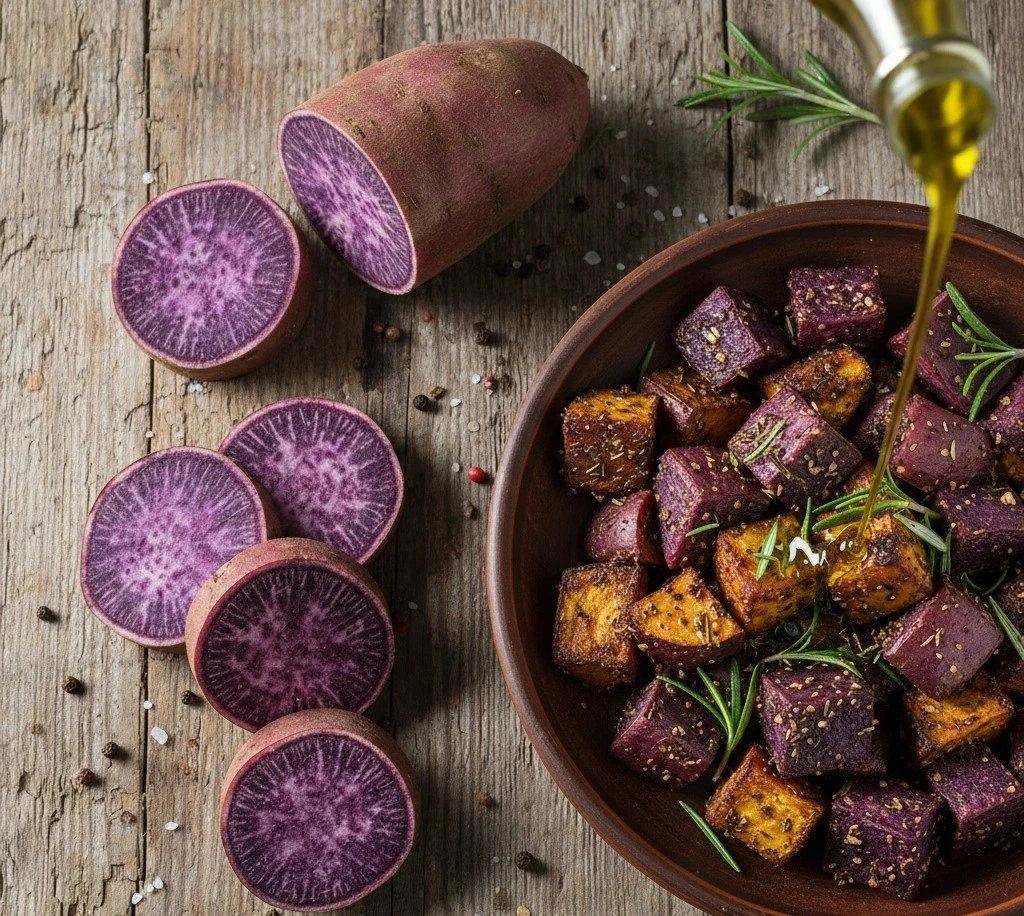
- Preheat your oven to 400°F (200°C).
- Wash and scrub the potatoes. You can leave the skin on for extra fiber!
- Dice into 1-inch cubes.
- Toss with oil, salt, and pepper.
- Spread on a baking sheet and roast for 25–30 minutes until tender.
2. Boiled (The Best for Mashing)
- Peel the potatoes and cut into large chunks.
- Place in a pot of cold water.
- Bring to a boil and simmer for 15–20 minutes until a fork slides in easily.
- Drain and use for mash or salads.
3. Baked (The Best for Meal Prep)
- Prick the skin several times with a fork.
- Wrap in foil (optional, but keeps moisture in).
- Bake at 400°F (200°C) for 45–60 minutes.
4. Air Fryer (The Best for Crunch)
- Slice into rounds or fries.
- Toss with a tiny bit of oil.
- Air fry at 375°F (190°C) for 15–18 minutes, shaking halfway through.
Easy Recipe Ideas
Purple Sweet Potato Fries
Slice your purple sweet potato into thin matchsticks. Toss with cornstarch (for extra crispiness), oil, and sea salt. Bake at 425°F for 20 minutes. Serve with a spicy vegan mayo or tahini dip.
Creamy Purple Sweet Potato Mash
Boil the potatoes as described above. Mash with a splash of coconut milk, a teaspoon of maple syrup, and a pinch of salt. The coconut milk reacts with the purple pigment to create a stunning lavender color!
Purple Sweet Potato Dessert (Vegan Pudding)
Blend 1 cup of cooked, mashed purple sweet potato with 1/2 cup coconut cream, 2 tbsp maple syrup, and a dash of vanilla extract. Chill for two hours. It’s a healthy, naturally sweet treat.
Vibrant Smoothie Bowl
Add 1/2 cup of frozen, steamed purple sweet potato chunks to your morning smoothie. Blend with frozen blueberries, a banana, and almond milk for a deep-purple breakfast bowl that is packed with antioxidants.
Roasted Potato & Arugula Salad
Toss roasted purple sweet potato cubes with fresh arugula, goat cheese (or vegan feta), toasted walnuts, and a balsamic vinaigrette. The contrast between the purple potato and green leaves is beautiful.
Cooking Tips & Flavor Pairings
- Don’t Overcook: Because they are drier than orange potatoes, they can become crumbly if overcooked.
- Add Acid: A squeeze of lemon or lime can brighten the purple color.
- Flavor Pairings: * Savory: Miso, ginger, garlic, rosemary, and smoked paprika.
- Sweet: Coconut, cinnamon, maple syrup, and honey.
Buying & Growing Guide
Where can I find purple sweet potatoes?
You can usually find them at Whole Foods, specialized Asian grocery stores (look for “Okinawan Yam“), or local farmers’ markets. They are most available during the fall and winter months.
Purple sweet potato plants & seeds
If you want to grow your own, you generally don’t use purple sweet potato seeds. Instead, you grow them from “slips”—which are sprouts grown from an existing potato. Purple sweet potato plants thrive in warm climates with plenty of sun. They require about 90–120 days of frost-free weather to produce large tubers. Simply submerge half of a organic purple potato in water until it sprouts, then plant those sprouts in well-drained soil.
Storage Tips
- Raw: Store in a cool, dark, and dry place (like a pantry). Do not refrigerate raw potatoes, as this can change their cell structure and flavor. They will last 2–3 weeks.
- Cooked: Store leftovers in an airtight container in the fridge for up to 5 days.
- Freezing: You can freeze cooked mash or roasted cubes for up to 3 months.
Common Mistakes to Avoid
- Treating them like Russet potatoes: Purple varieties are much denser. They need a bit more fat (oil or butter) or liquid (milk/broth) to feel moist.
- Peeling too early: The skin holds a lot of the nutrients. If roasting, try keeping the skin on!
- Boiling from hot water: Always start potatoes in cold water and bring to a boil together to ensure even cooking.
FAQs
Q: Are purple sweet potatoes genetically modified? A: No! Their color is entirely natural and comes from the same pigments found in berries.
Q: Can I use them in baking? A: Yes! They make excellent pies, breads, and even purple gnocchi.
Q: Do they taste like regular sweet potatoes? A: They are less sweet and more “earthy” or “nutty” than the orange variety.
Q: Why is my purple potato green inside? A: Sometimes a pH imbalance (usually from baking soda in a recipe) can turn the purple pigment green. Adding an acid like lemon juice can fix this.
Q: Are the leaves of the purple sweet potato plant edible? A: Yes, they are highly nutritious and can be sautéed like spinach.
Q: Can I eat purple sweet potatoes on a keto diet? A: While they are “healthier” carbs, they are still high in starch, so they are generally not considered keto-friendly.
Conclusion
The purple sweet potato is a true gem of the vegetable world. From its incredible health benefits and high antioxidant count to its stunning visual appeal, there is every reason to make it a regular part of your diet. Whether you’re whipping up a creamy mash or roasting them for a crisp salad, these colorful tubers are sure to impress.
Ready to brighten up your dinner table? Head to your local market and grab a few today!