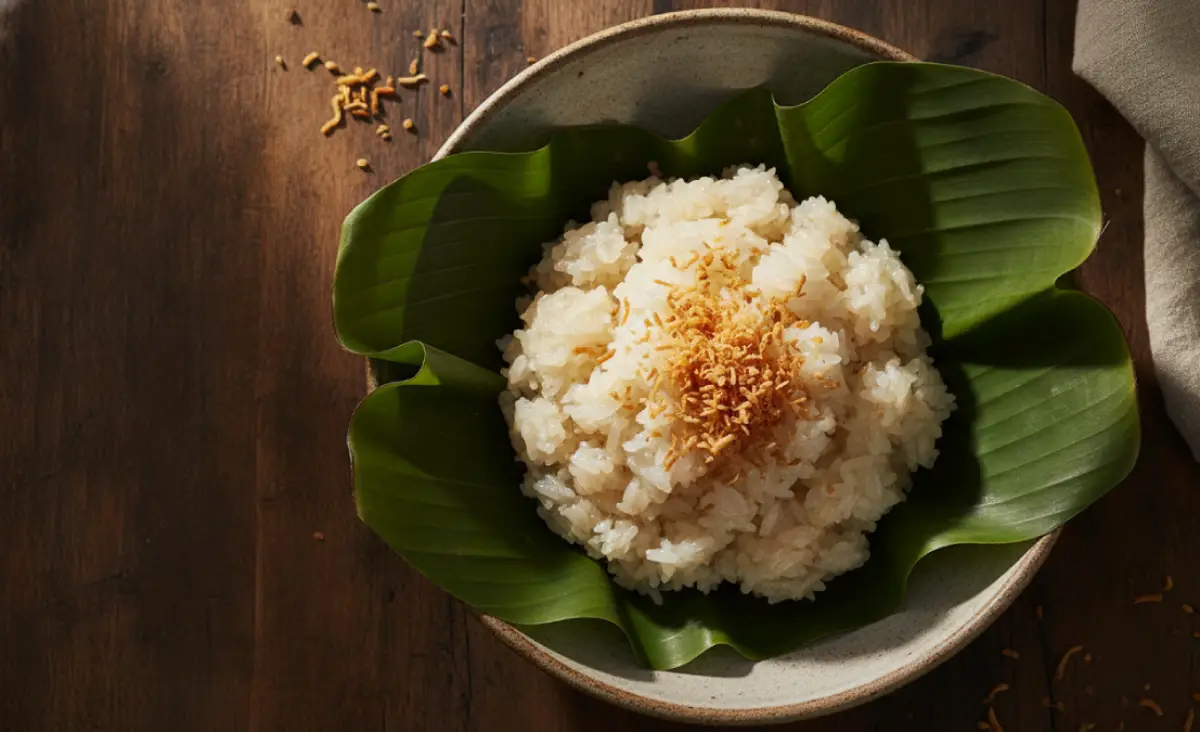
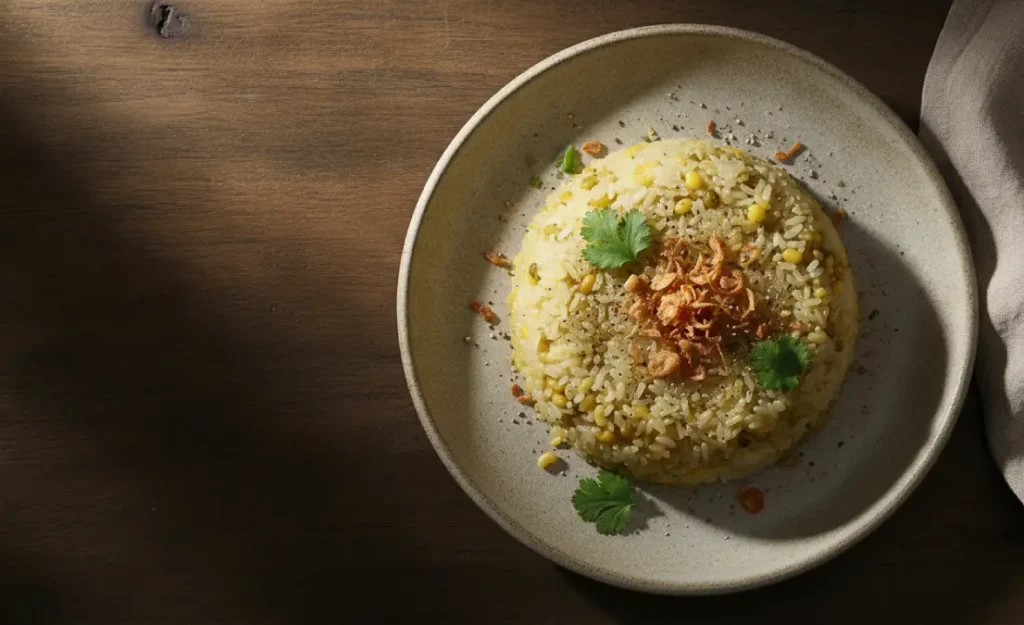
Vietnamese sweet coconut sticky rice, known as xôi, is one of the most versatile dishes in Vietnamese home cooking — equally at home as a breakfast, a festival dessert, or a sweet snack wrapped in banana leaf for the road. The base is always the same glutinous rice steamed until tender and glossy, but the flavor possibilities shift dramatically depending on what’s folded in. Below are five complete recipes, each with its own ingredients table, covering the classic coconut version, a fragrant pandan variation, two fruit-and-bean options, and one festive red version reserved for special occasions.
What Is Vietnamese Sweet Coconut Sticky Rice?
Xôi is made from glutinous rice — sometimes called sticky rice — which behaves very differently from regular long-grain rice once cooked. Its starch structure causes the grains to clump together into a dense, chewy texture rather than separating, which is part of the basic starch composition that distinguishes glutinous rice from standard varieties. Once steamed, the rice is typically finished with coconut milk and sugar, giving it a glossy sheen and rich flavor without needing any additional fat.
What makes xôi so common across Vietnamese households is how adaptable it is. The same base technique works whether you’re making a simple coconut version for breakfast or a more elaborate fruit-and-bean variation for a celebration.
Key Ingredients and Tools You’ll Need
A handful of specific ingredients and one piece of equipment make all five recipes below much easier to get right on the first try.
- Glutinous rice: Sometimes labeled “sweet rice” or “sticky rice” at the store — this is not interchangeable with regular jasmine or long-grain rice.
- Coconut milk: Full-fat canned coconut milk gives the richest result; light coconut milk will work but produces a less glossy finish.
- A steamer basket or bamboo steamer: Traditional xôi is steamed rather than boiled, which keeps the texture firm instead of mushy.
- Pandan leaves or extract: Used for the fragrant green variation, available fresh, frozen, or as a bottled extract at most Asian grocery stores.
If you don’t have a dedicated steamer, a metal colander set inside a covered pot works as a reasonable substitute. For more background on the technique itself, see our steaming rice guide, or browse our broader Vietnamese dessert recipes collection for related dishes.
Classic Vietnamese Sweet Coconut Sticky Rice Recipes
These two recipes are the foundation most other variations are built on.
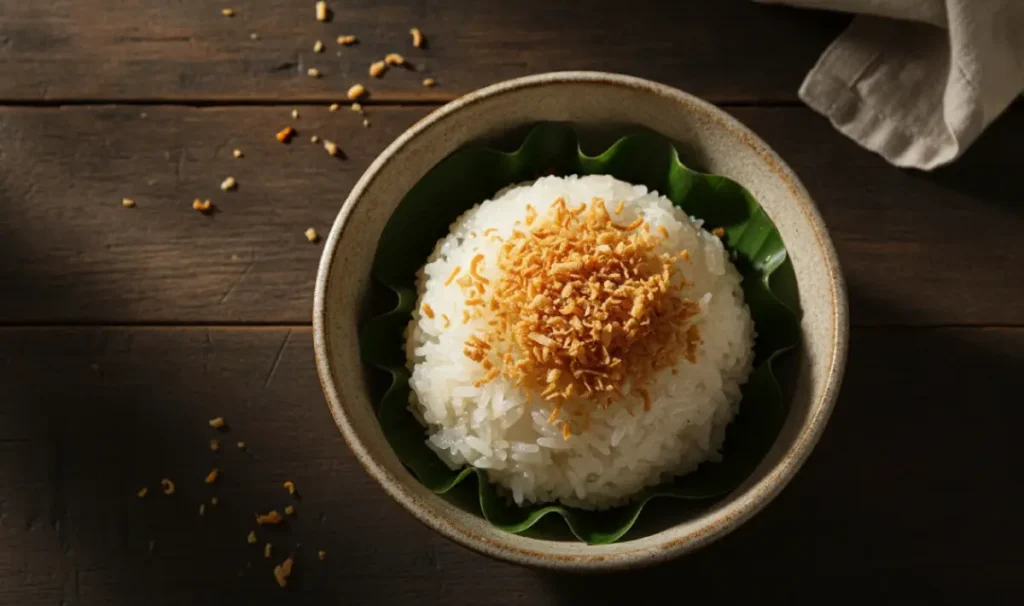
Classic Coconut Sticky Rice (Xôi Dừa)
| Ingredient | Amount |
|---|---|
| Glutinous rice, soaked overnight | 2 cups |
| Coconut milk | 1/2 cup |
| Sugar | 3 tbsp |
| Salt | 1/4 tsp |
| Toasted shredded coconut, for topping | 2 tbsp |
- Drain soaked rice and steam in a lined steamer basket for 20 minutes, until just tender.
- Warm coconut milk, sugar, and salt together until the sugar dissolves.
- Fold the coconut milk mixture into the steamed rice, then steam for another 5–10 minutes and top with toasted coconut before serving.
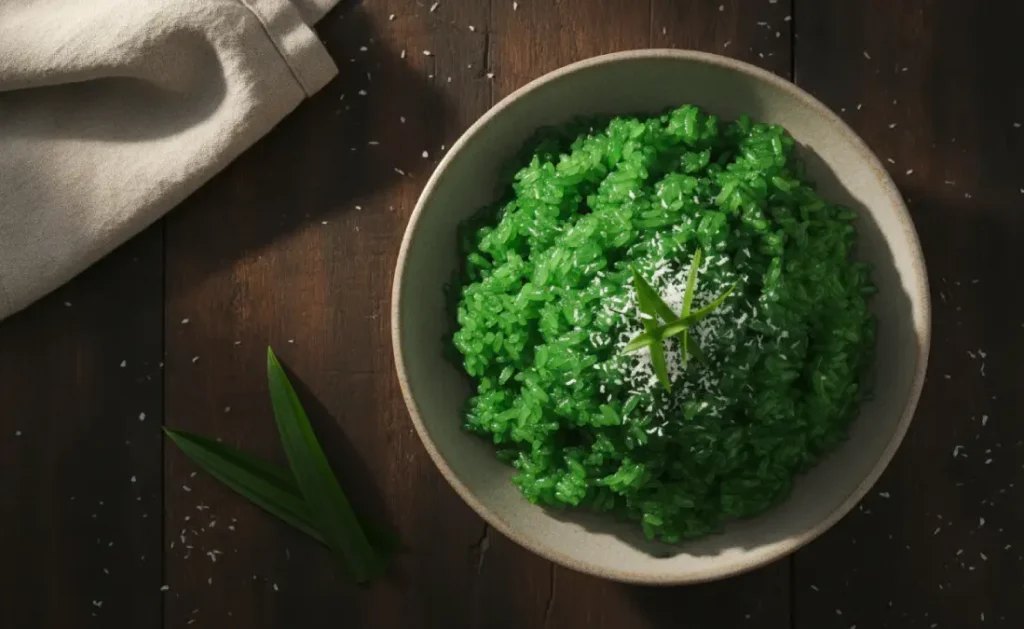
Pandan Coconut Sticky Rice (Xôi Lá Dứa)
| Ingredient | Amount |
|---|---|
| Glutinous rice, soaked overnight | 2 cups |
| Pandan extract or fresh pandan juice | 2 tbsp |
| Coconut milk | 1/2 cup |
| Sugar | 3 tbsp |
| Salt | 1/4 tsp |
- Soak rice with pandan extract added to the soaking water for a vivid green color.
- Drain and steam for 20 minutes, until tender.
- Stir in warmed coconut milk, sugar, and salt, then steam an additional 5 minutes before serving.
Fruit and Bean Variations
These two add texture and flavor contrast to the same basic coconut sticky rice base.
Mango Coconut Sticky Rice (Xôi Xoài)
| Ingredient | Amount |
|---|---|
| Glutinous rice, soaked overnight | 2 cups |
| Coconut milk | 3/4 cup |
| Sugar | 1/4 cup |
| Salt | 1/4 tsp |
| Ripe mango, sliced | 1 large |
| Toasted sesame seeds, for topping | 1 tbsp |
- Steam rice for 20 minutes, until tender.
- Warm coconut milk, sugar, and salt, then stir half into the rice while reserving the rest as a sauce.
- Plate rice alongside sliced mango, drizzle with the reserved coconut sauce, and top with sesame seeds.
Mung Bean Coconut Sticky Rice (Xôi Đậu Xanh)
| Ingredient | Amount |
|---|---|
| Glutinous rice, soaked overnight | 2 cups |
| Split mung beans, soaked 4 hours | 1/2 cup |
| Coconut milk | 1/2 cup |
| Sugar | 3 tbsp |
| Salt | 1/4 tsp |
- Steam soaked mung beans separately for 15 minutes, until soft, then mash lightly.
- Steam rice for 20 minutes, then fold in warmed coconut milk, sugar, and salt.
- Gently fold mashed mung beans into the finished rice just before serving.
A Festive Variation Worth the Extra Effort
This version is traditionally reserved for celebrations and holidays, thanks to its striking red-orange color from gấc fruit.
Red Gấc Coconut Sticky Rice (Xôi Gấc)
| Ingredient | Amount |
|---|---|
| Glutinous rice, soaked overnight | 2 cups |
| Gấc fruit pulp (fresh or frozen) | 1/4 cup |
| Coconut milk | 1/2 cup |
| Sugar | 1/4 cup |
| Salt | 1/4 tsp |
| Vegetable oil | 1 tbsp |
- Mix soaked rice thoroughly with gấc pulp and a little vegetable oil until evenly coated and deep red-orange in color.
- Steam for 20–25 minutes, until tender, fluffing partway through.
- Stir in warmed coconut milk, sugar, and salt, then steam an additional 5 minutes before serving.
Tips for Perfect Sticky Rice Every Time
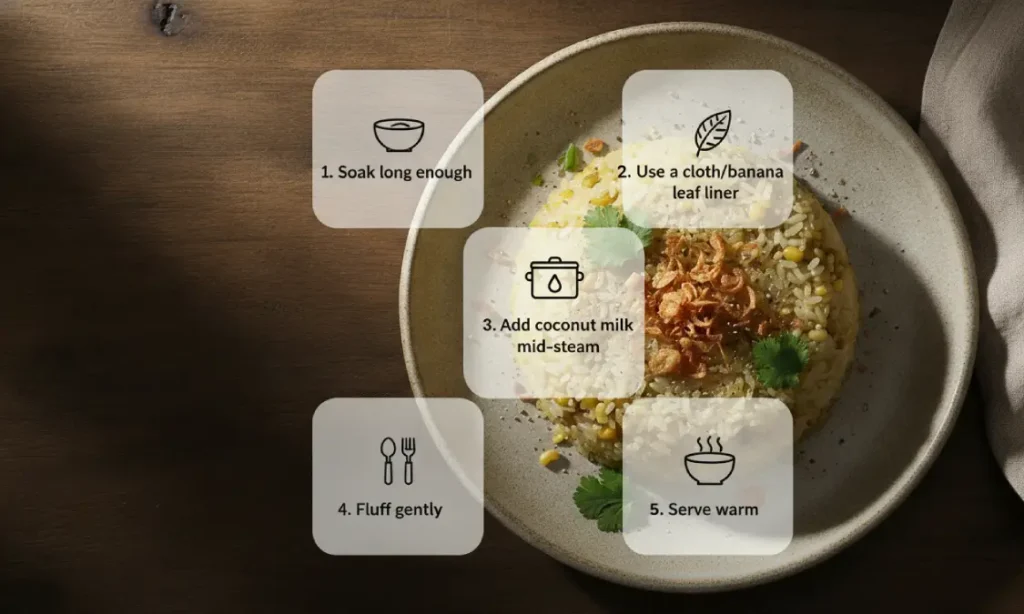
A few small habits make the difference between rice that’s perfectly tender and rice that’s either too firm or mushy:
- Soak the rice long enough. A full overnight soak (or at least 6–8 hours) is what allows glutinous rice to steam evenly instead of staying hard in the center.
- Use a cloth or banana leaf liner. This prevents the rice from sticking directly to the steamer holes and helps retain moisture.
- Don’t skip the coconut milk addition partway through. Adding it mid-steam, rather than only at the start, keeps the texture from becoming too wet or too dry.
- Fluff gently between steaming stages. This helps distribute heat and liquid evenly without breaking down the rice’s structure.
- Serve warm whenever possible. Sticky rice firms up significantly once it cools, so it’s best enjoyed shortly after steaming.
Frequently Asked Questions
Q: Can I use a rice cooker instead of a steamer?
Many rice cookers have a dedicated steam setting or steamer attachment that works well; just check that your model can handle glutinous rice specifically.
Q: Do I really need to soak the rice overnight?
It’s strongly recommended — skipping the soak often results in unevenly cooked rice with a hard center, even with extended steaming time.
Q: Where can I find gấc fruit for the red version?
Frozen gấc pulp is the most common form available outside Vietnam, typically found at Asian grocery stores in the frozen fruit section.
Q: Can I make any of these ahead of time?
Yes, all versions reheat well with a quick re-steam or a few seconds in the microwave with a damp paper towel placed over the rice.
Q: Is there a substitute for pandan extract?
A few drops of vanilla extract will give a different but still pleasant aroma if pandan isn’t available, though the color won’t be the same vivid green.
Q: Why did my sticky rice turn out gummy instead of tender?
This usually happens from oversteaming or adding too much coconut milk at once. Stick close to the timing and amounts in the recipes above.
My Expert Opinion
After years of making Vietnamese rice dishes professionally, my honest opinion is that most people rush the soaking step more than any other part of this dish, and it shows in the final texture. A short soak might save you a few hours upfront, but it almost always costs you evenness in the final result — you’ll get a center that’s noticeably firmer than the edges. I’d also encourage people not to be intimidated by the gấc version; it looks elaborate, but it follows the exact same technique as the classic coconut version with one extra ingredient folded in. If you can make the basic xôi dừa well, you already have the skills for every recipe on this list.
Conclusion
Vietnamese sweet coconut sticky rice is a dish that rewards patience more than complexity — the technique stays consistent across all five recipes, with the right soaking time and steaming method doing most of the work. Whether you start with the classic coconut version or work your way up to the festive gấc variation, each ingredients table above gives you exactly what you need for a tender, glossy result every time.