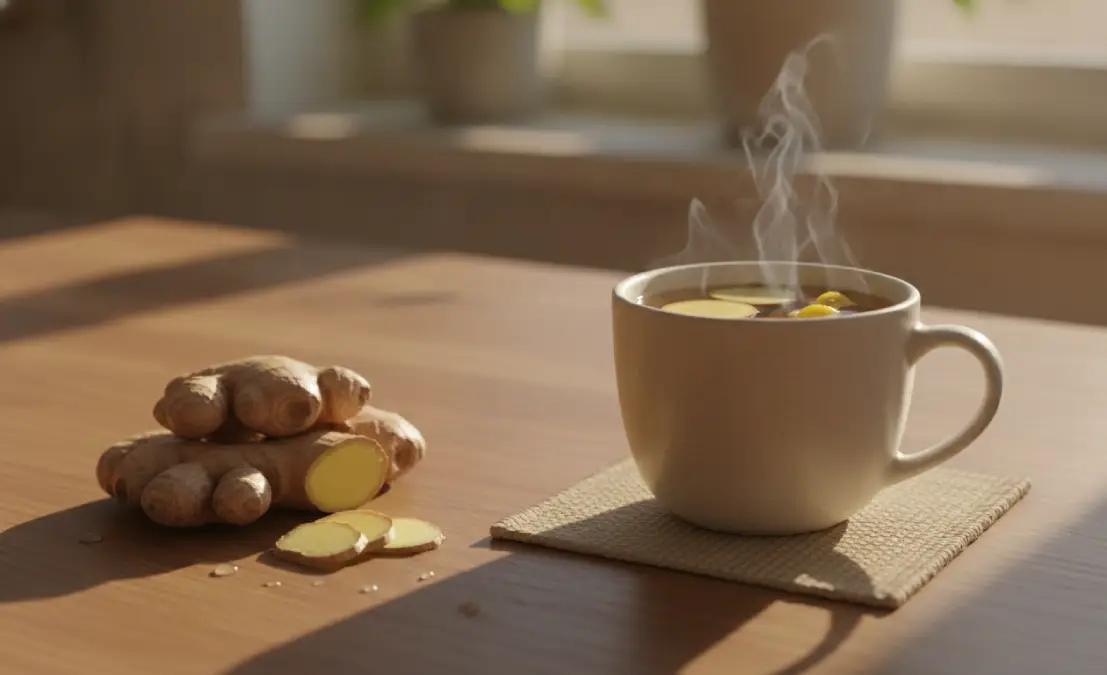
How ginger tea improves health naturally comes down largely to one compound — gingerol — found in fresh ginger root, which is responsible for most of the effects people report after drinking it regularly. Beyond the science, ginger tea has been part of home remedies across multiple cultures for generations, valued for its warmth, its sharp flavor, and its reputation for settling an upset stomach. Below you’ll find the research behind those effects, plus five complete recipes — each with its own ingredients table — ranging from a basic brew to more targeted variations.
Note: This article is for general informational purposes and isn’t a substitute for personalized medical advice. If you take blood-thinning medication or have a specific health condition, check with a doctor before drinking ginger tea regularly.
The Science Behind Ginger Tea’s Health Benefits
Fresh ginger contains gingerol, a compound with documented antioxidant and anti-inflammatory properties. Steeping ginger in hot water extracts a meaningful amount of this compound, which is part of why ginger tea is often recommended as a gentler alternative to raw ginger for people who find the root too sharp to eat directly. According to research on ginger’s antioxidant compounds, regular consumption may help the body manage everyday inflammation, though it’s worth noting that most studies use concentrated ginger extract rather than a single cup of tea, so effects from tea alone tend to be milder and more gradual.
Ginger has also been studied specifically for its effect on nausea, with research suggesting it may help reduce feelings of queasiness related to motion sickness, pregnancy, and recovery from certain medical procedures — though anyone pregnant or undergoing treatment should check with a doctor before relying on it for that purpose.

Top Ways Ginger Tea Supports Your Body
Beyond the headline benefits, ginger tea is associated with several everyday wellness effects:
- Digestive comfort: Ginger has traditionally been used to ease bloating and mild stomach discomfort after meals.
- Nausea relief: Many people reach for ginger tea specifically for queasiness, whether from travel, illness, or other causes.
- Warming circulation: The natural heat sensation from ginger is often described as comforting during cold weather or when feeling run down.
- Sore throat support: Combined with honey, ginger tea is a common home remedy for soothing throat irritation.
- General antioxidant intake: Like many herbal teas, ginger tea contributes to overall antioxidant consumption as part of a balanced diet.
For background on how ginger compares to other digestive-supporting ingredients, see this general overview of digestive health and diet, or browse our broader natural remedies guide for related ideas.
How to Brew the Perfect Cup of Ginger Tea
The basic technique behind every recipe below is the same: fresh ginger, sliced or grated, steeped in hot water for long enough to extract its flavor and beneficial compounds without becoming overly bitter. Using fresh ginger rather than ground ginger powder generally produces a brighter, more aromatic cup, though powder works in a pinch if that’s what you have on hand. For more herbal options beyond ginger, check out our herbal tea recipes collection.
Classic and Health-Boosting Ginger Tea Recipes
Start with these two if you’re new to making ginger tea at home.
Classic Fresh Ginger Tea
| Ingredient | Amount |
|---|---|
| Fresh ginger root, thinly sliced | 1-inch piece |
| Water | 2 cups |
| Honey (optional) | 1 tsp |
- Bring water to a boil, then add sliced ginger and reduce to a simmer.
- Simmer for 10–15 minutes, depending on how strong you want the flavor.
- Strain into a mug and stir in honey if desired.
Ginger Lemon Honey Tea
| Ingredient | Amount |
|---|---|
| Fresh ginger root, sliced | 1-inch piece |
| Water | 2 cups |
| Lemon juice | 1 tbsp |
| Honey | 1–2 tsp |
- Simmer ginger in water for 10 minutes, then strain.
- Stir in lemon juice and honey while the tea is still warm.
- Taste and adjust honey to preference before serving.

Specialty Ginger Tea Recipes for Targeted Benefits
These two variations add other functional ingredients alongside ginger for a more specific focus.
Ginger Turmeric Tea (Anti-Inflammatory Boost)
| Ingredient | Amount |
|---|---|
| Fresh ginger root, sliced | 1-inch piece |
| Ground turmeric | 1/2 tsp |
| Water | 2 cups |
| Black pepper | Small pinch |
| Honey (optional) | 1 tsp |
- Simmer ginger and turmeric together in water for 10–12 minutes.
- Add a small pinch of black pepper near the end, which may help the body absorb turmeric’s active compound more effectively.
- Strain into a mug and stir in honey if desired.
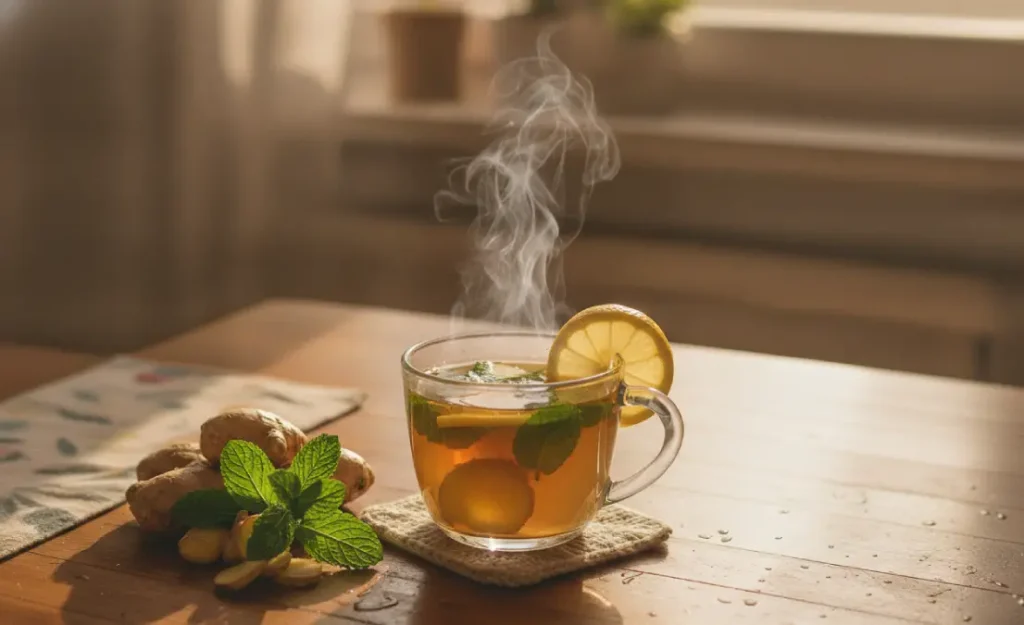
Ginger Mint Tea (Digestive Support)
| Ingredient | Amount |
|---|---|
| Fresh ginger root, sliced | 1-inch piece |
| Fresh mint leaves | 6–8 leaves |
| Water | 2 cups |
| Honey (optional) | 1 tsp |
- Simmer ginger in water for 8–10 minutes.
- Remove from heat and add fresh mint leaves, letting them steep for an additional 3–4 minutes.
- Strain into a mug, discarding the solids, and sweeten if desired.
A Warming Spiced Variation
Spiced Ginger Chai Tea
| Ingredient | Amount |
|---|---|
| Fresh ginger root, sliced | 1-inch piece |
| Cinnamon stick | 1 |
| Cardamom pods, crushed | 2 |
| Black tea bag | 1 |
| Water | 1 1/2 cups |
| Milk | 1/2 cup |
| Honey or sugar | 1–2 tsp |
- Simmer ginger, cinnamon, and cardamom in water for 10 minutes to build a fragrant base.
- Add the tea bag and milk, then simmer gently for another 3–4 minutes without letting it boil over.
- Strain into a mug and sweeten with honey or sugar to taste.
Tips for Getting the Most Health Benefit From Ginger Tea
A few habits help you get a more consistent, flavorful, and beneficial cup:
- Use fresh ginger when possible. It generally contains more of the beneficial compounds than dried or powdered ginger per equivalent amount.
- Simmer rather than just steep. A gentle simmer extracts more flavor and compounds from sliced ginger than hot water alone.
- Drink it consistently, not just occasionally. Most reported benefits come from regular use over time rather than a single cup.
- Pair with black pepper in turmeric versions. This combination is commonly used to support better absorption of turmeric’s active compound.
- Be mindful of strength if you’re sensitive to spice. Start with a smaller piece of ginger and increase gradually to find your preferred intensity.

Frequently Asked Questions
Q: How much ginger tea is reasonable to drink in a day?
Most people tolerate 2–3 cups per day well, though anyone with a sensitive stomach or specific health condition should start with one cup and see how they feel.
Q: Can ginger tea help with nausea right away?
Many people report feeling relief within 20–30 minutes, though individual response varies and it isn’t a guaranteed remedy for everyone.
Q: Is ginger tea safe during pregnancy?
Ginger is commonly used to help with pregnancy-related nausea, but pregnant individuals should confirm appropriate amounts with their doctor first.
Q: Does ginger tea interact with any medications?
Ginger can interact with blood-thinning medications and some diabetes medications, so it’s worth checking with a doctor if you take either.
Q: Can I use ground ginger instead of fresh?
Yes, about 1/4 teaspoon of ground ginger can substitute for a 1-inch piece of fresh ginger, though the flavor will be slightly less bright.
Q: How long does brewed ginger tea last in the fridge?
It keeps well for up to 3 days refrigerated; reheat gently on the stove or in the microwave before drinking.
My Expert Opinion
After years of researching and writing about functional foods, my honest take is that ginger tea’s biggest benefit isn’t any single dramatic effect — it’s consistency. People who drink it occasionally when they already feel unwell tend to be less impressed than people who drink it regularly as part of a routine, since many of the documented benefits build gradually rather than appearing after one cup. I’d also caution against expecting it to replace medical treatment for ongoing digestive issues or chronic inflammation; it’s a genuinely useful daily habit, not a cure. My honest recommendation is to start with the classic recipe, build the habit, and add the turmeric or chai variations once it’s a regular part of your day rather than something you only reach for occasionally.
Conclusion
How ginger tea improves health naturally ultimately comes down to a combination of real, documented compounds and a long history of traditional use — and the good news is that making a genuinely good cup at home takes very little effort. Start with the classic recipe above, experiment with the turmeric or chai variations once you know your preferred strength, and treat it as a small, consistent daily habit rather than an occasional remedy.