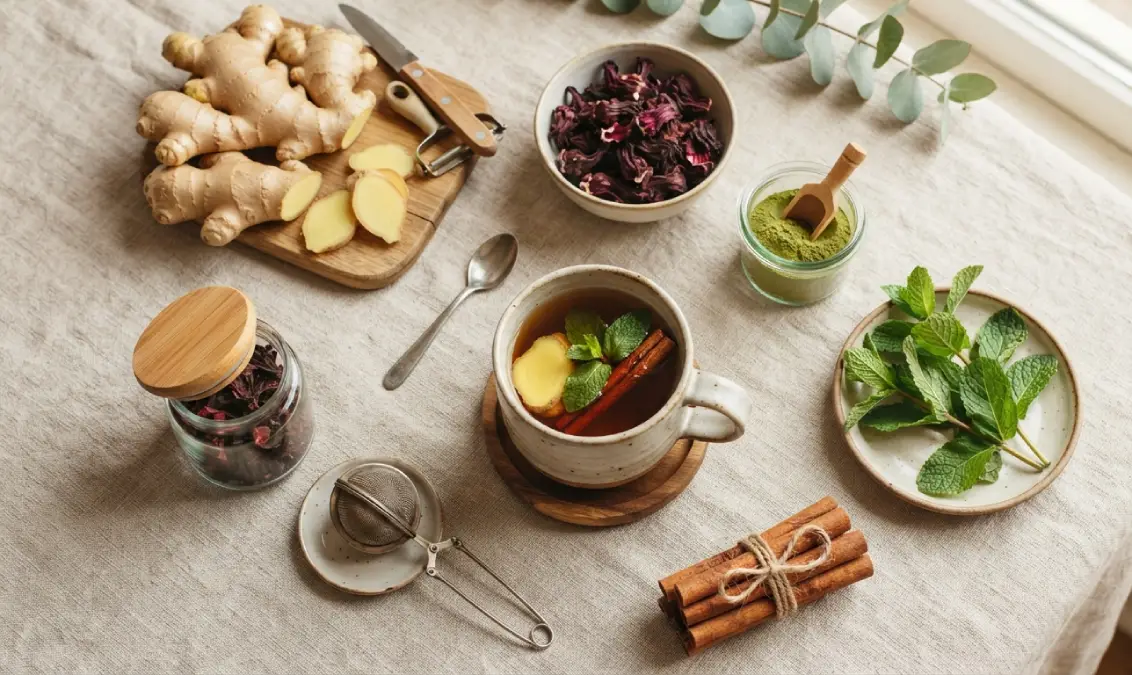
A well-made detox ginger tea recipe doesn’t need a long ingredient list or unusual superfoods to be effective — it needs the right supporting ingredients to bring out what ginger already does well, and the consistency to drink it regularly. This guide offers five entirely new blends, each with its own ingredients table, covering a peppermint and ginger digestive tea, an apple cider vinegar morning shot blend, a hibiscus and ginger antioxidant version, a moringa and ginger green blend, and a spiced ginger detox chai that works as a warming dinner wind-down.
Note: This article is for general informational purposes only. If you have a health condition or take medication — particularly blood thinners or diabetes medication — speak with your doctor before making ginger tea a daily habit.
How Supporting Ingredients Amplify Ginger’s Benefits
Fresh ginger does a lot on its own — its gingerol and shogaol compounds have documented antioxidant and anti-inflammatory properties, and its warming quality supports circulation and digestion in ways that have been observed consistently across traditional medicine systems for centuries. What the supporting ingredients in each blend below do is address specific additional goals: peppermint for further digestive ease, apple cider vinegar for blood sugar stability, hibiscus for cardiovascular antioxidant support, moringa for nutrient density, and warming chai spices for a relaxing, serotonin-supporting evening ritual. The emerging research on synergistic effects between herbal compounds suggests that combining functional ingredients thoughtfully tends to produce more consistent results than using any one of them in isolation — which is part of what makes a multi-ingredient detox tea blend more than the sum of its parts.
Choosing Your Ginger: Fresh vs. Dried vs. Powdered
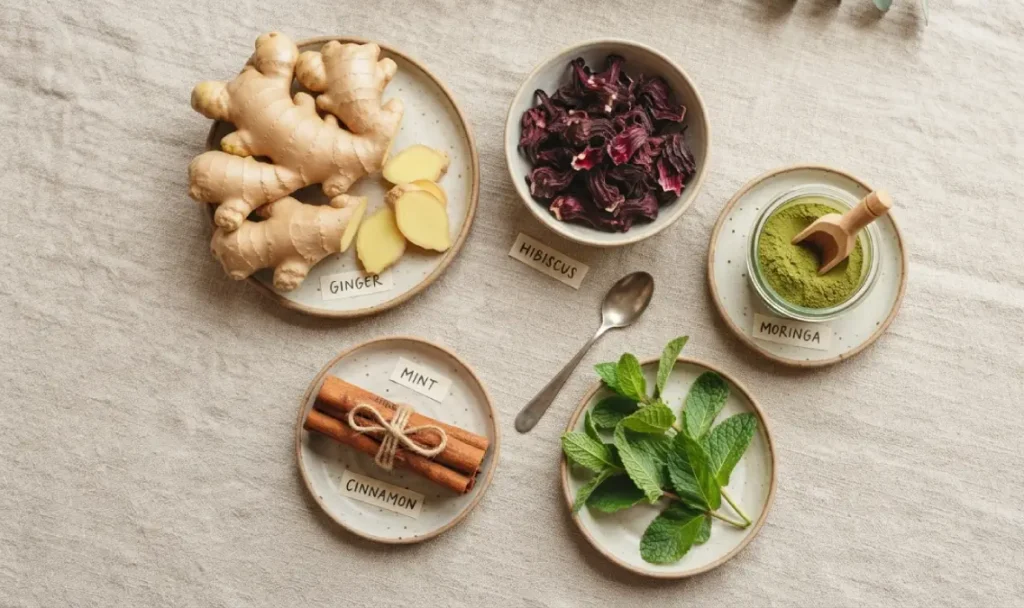
Before getting into the recipes, it’s worth clarifying which form of ginger works best in each context:
- Fresh ginger root: Highest in gingerol, the more potent anti-nausea and anti-inflammatory compound; produces a brighter, more pungent flavor and is best for simmered teas.
- Dried ginger: Higher in shogaol, which forms as gingerol converts during drying; slightly more intense flavor per gram but less fresh brightness.
- Ground ginger powder: Most convenient but lowest in active compound concentration by volume; a reasonable substitute at a ratio of about 1/4 teaspoon powder per 1-inch piece of fresh root.
All five recipes below use fresh ginger as the primary recommendation since it produces the most flavorful and nutrient-rich result, but substitutions are noted in each FAQ where relevant. For more on choosing functional tea ingredients, browse our herbal tea recipes guide, or this general overview of anti-inflammatory foods and their mechanisms.
Digestive and Morning Detox Ginger Tea Recipes
These two are the best options for morning routines or post-meal digestive support.
Peppermint and Ginger Digestive Detox Tea
| Ingredient | Amount |
|---|---|
| Fresh ginger root, sliced | 1-inch piece |
| Water | 2 cups |
| Fresh peppermint leaves | 8–10 leaves |
| Lemon juice | 1 tbsp |
| Honey (optional) | 1 tsp |
- Simmer sliced ginger in water over medium-low heat for 10 minutes.
- Remove from heat, add fresh peppermint leaves, and let steep for 4–5 minutes — adding peppermint off the heat preserves its volatile oils, which are responsible for most of its digestive benefit.
- Strain into a mug, stir in lemon juice and honey if desired, and serve warm after meals.
Apple Cider Vinegar Ginger Morning Detox Tea
| Ingredient | Amount |
|---|---|
| Fresh ginger root, sliced | 1-inch piece |
| Water | 2 cups |
| Apple cider vinegar (raw, with mother) | 1 tbsp |
| Lemon juice | 1 tbsp |
| Honey | 1 tsp |
| Cayenne pepper | Tiny pinch |
- Simmer ginger in water for 10–12 minutes, then strain into a mug and let cool slightly.
- Stir in apple cider vinegar, lemon juice, and honey — adding the ACV after simmering rather than during cooking preserves the beneficial bacteria in raw ACV.
- Add a tiny pinch of cayenne, stir well, and drink first thing in the morning before eating for the most consistent results.
Antioxidant and Nutrient-Dense Detox Ginger Tea Recipes
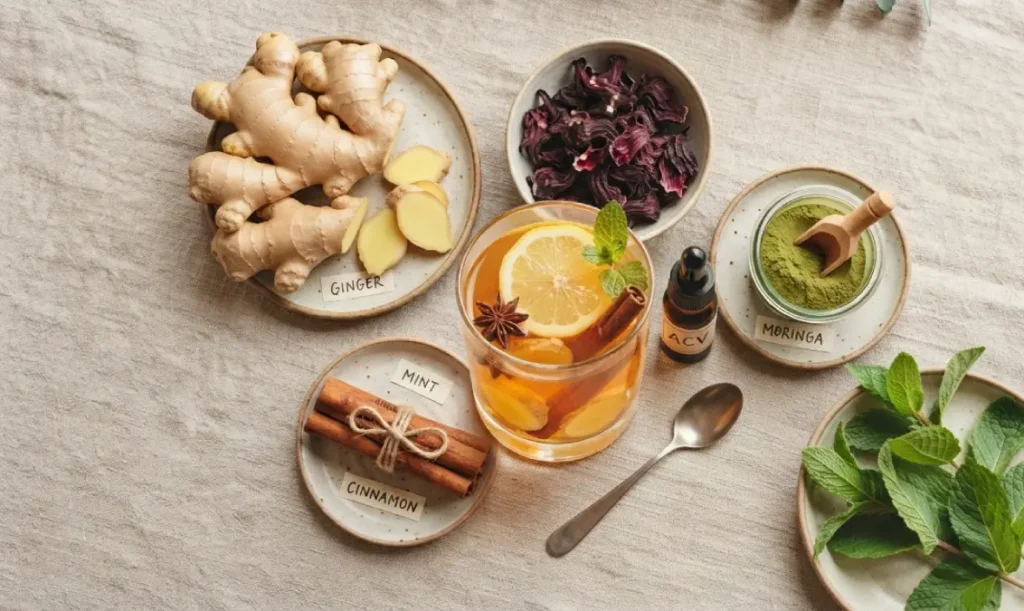
These two add ingredients with their own significant antioxidant or nutritional profiles to the ginger base. For more functional beverage ideas, see our healthy smoothie recipes collection.
Hibiscus and Ginger Antioxidant Detox Tea
| Ingredient | Amount |
|---|---|
| Fresh ginger root, sliced | 1-inch piece |
| Dried hibiscus flowers | 1 tbsp |
| Water | 2 cups |
| Lemon juice | 1 tbsp |
| Honey or agave | 1–2 tsp |
| Fresh orange peel (optional) | 1 small strip |
- Bring water to a boil with ginger slices and hibiscus flowers, then reduce to a simmer for 8–10 minutes — hibiscus releases its deep crimson color and tart flavor quickly.
- Add orange peel in the last 2 minutes of simmering if using.
- Strain into a mug, stir in lemon juice and sweetener to taste, and serve hot or cooled over ice for a vibrant, tangy drink.
Moringa and Ginger Green Detox Tea
| Ingredient | Amount |
|---|---|
| Fresh ginger root, sliced | 1-inch piece |
| Moringa powder | 1/2 tsp |
| Water | 2 cups |
| Lemon juice | 1 tbsp |
| Honey | 1 tsp |
| Fresh mint (optional) | 3–4 leaves |
- Simmer ginger in water for 10 minutes, then remove from heat and let cool slightly to around 170°F.
- Whisk in moringa powder — adding it at a lower temperature rather than at full boil helps preserve its heat-sensitive nutrients.
- Strain if desired (the moringa will mostly blend in), stir in lemon juice and honey, add fresh mint if using, and serve warm.
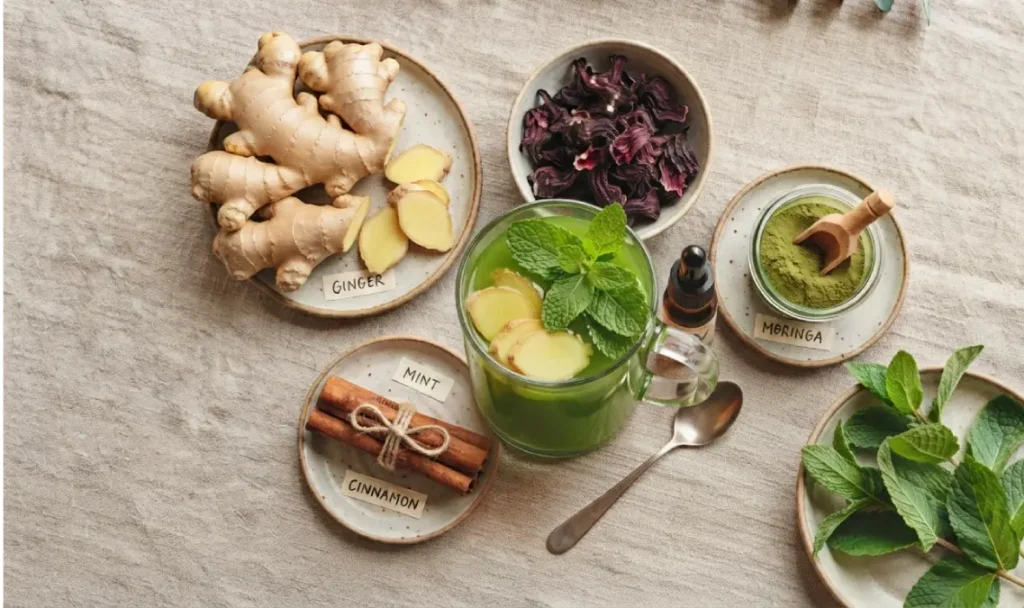
A Warming Evening Detox Ginger Tea
Spiced Ginger Detox Chai
| Ingredient | Amount |
|---|---|
| Fresh ginger root, sliced | 1.5-inch piece |
| Water | 1 1/2 cups |
| Milk or plant-based milk | 1/2 cup |
| Cinnamon stick | 1 |
| Cardamom pods, lightly crushed | 3 |
| Cloves | 2 |
| Black pepper | Small pinch |
| Honey | 1–2 tsp |
- Combine ginger, cinnamon stick, cardamom pods, cloves, and black pepper in water and bring to a simmer for 12–15 minutes to build a deeply spiced base.
- Add milk and simmer gently for a further 3–4 minutes without boiling.
- Strain into a mug, sweeten with honey, and serve warm as an evening wind-down drink.
How to Build a Consistent Detox Ginger Tea Routine
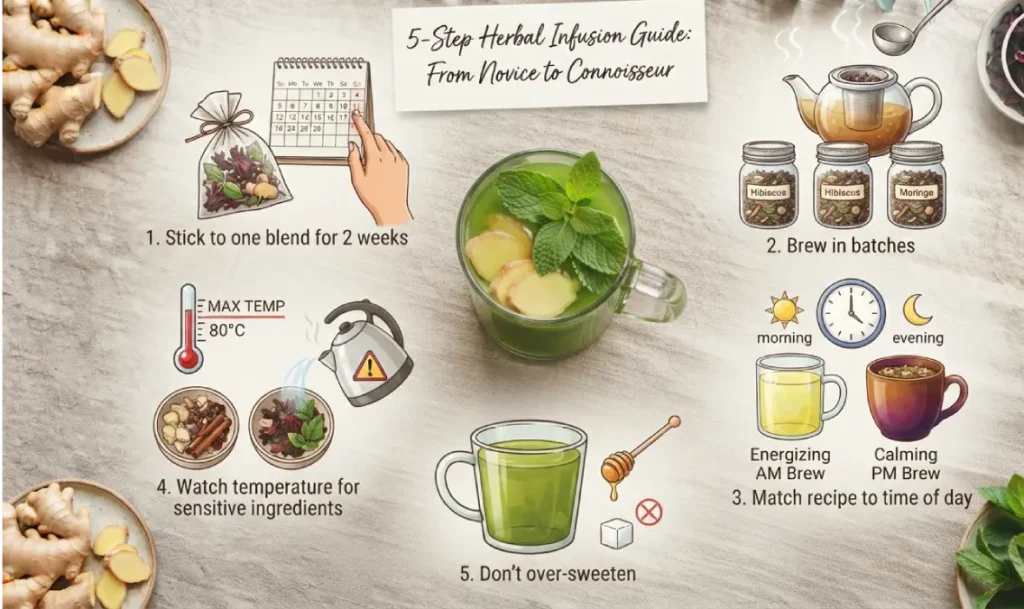
- Pick one recipe and stick with it for at least two weeks. Cycling through different blends every day makes it harder to identify what’s actually working; consistency with one blend gives you a much clearer picture of its effects.
- Brew in batches when possible. Most of these recipes scale easily to a 4-cup batch; store in the fridge and reheat individual servings to save time on busy mornings.
- Match the recipe to the time of day. The ACV ginger blend is best in the morning; the peppermint and hibiscus versions work well after meals; the spiced chai is specifically designed as an evening drink.
- Use the right temperature for each ingredient. Moringa and peppermint lose volatile compounds at boiling temperatures; green tea gets bitter — adding these off the heat or at a lower temperature preserves what makes them effective.
- Don’t sweeten heavily. A small amount of honey balances flavor without undermining the blood sugar support many of these blends provide; adding multiple teaspoons of sweetener largely counteracts the benefit of the ginger and ACV.
Frequently Asked Questions
Q: What is the best time of day to drink detox ginger tea?
It depends on the blend: the ACV and peppermint versions are best in the morning or after meals; the hibiscus and moringa versions work any time; the spiced chai is best in the evening.
Q: How long does a batch of detox ginger tea keep in the fridge?
Most hot-brewed versions keep well for 2–3 days refrigerated in a sealed jar; the hibiscus version keeps its color and flavor particularly well when chilled.
Q: Can I use ginger powder instead of fresh root?
Yes — use about 1/4 teaspoon of ground ginger per 1-inch piece of fresh root called for; the flavor will be slightly less bright but the functional properties are largely preserved.
Q: Is moringa safe to drink daily?
Moringa is generally considered safe in the small amounts used in tea; however, it’s very nutrient-dense and some people find large amounts cause digestive upset — starting with 1/4 teaspoon and working up is sensible.
Q: Can I make any of these recipes caffeine-free?
Yes — all five recipes as written are naturally caffeine-free (the chai version uses no tea, just spices and milk); green tea or black tea can be added to any of them if you want a caffeine lift.
Q: Does adding honey reduce the detox effect of these teas?
A small amount of raw honey — a teaspoon or less — doesn’t significantly undermine any of these blends; it’s the antioxidant content and digestive properties of the other ingredients that drive the benefit, not the absence of all sweetness.
My Expert Opinion
After years of researching and writing about functional foods, my honest take is that the most effective detox ginger tea recipe is whichever one you’ll actually drink every day — which is a more important variable than the specific ingredients in the blend. The ACV and ginger morning version has the most research-supported combination of ingredients for blood sugar and digestive support, and it’s the one I’d recommend to anyone wanting the most functional cup. The hibiscus and ginger version, however, is the one I make most often personally — partly because the flavor is genuinely enjoyable in a way that makes the habit easy to sustain, and partly because hibiscus has a well-supported antioxidant profile that complements ginger without needing any adjustment or acquired taste. If sustainability of the habit is the goal, pick the recipe that tastes best to you first and optimize for functional ingredients second.
Conclusion
A detox ginger tea recipe works best as a daily habit rather than an occasional intervention, and these five blends give you enough variety to find a version that fits both your taste and your routine without repetition. Whether you start with the bright, tangy peppermint version or wind down with the spiced chai, each ingredients table above gives you everything you need to start brewing today and build a consistent practice worth maintaining.