- When Is Christmas Celebrated in Italy?
- How Does Italy Celebrate Christmas?
- Italy Christmas Traditions (Full Breakdown)
- 1. Presepe – Traditional Nativity Scenes
- 2. The Feast of the Seven Fishes
- 3. Italian Christmas Witch – La Befana
- 4. Tombola – Italian Christmas Bingo
- 5. Christmas Day Lunch (Pranzo di Natale)
- What Do Italians Eat for Christmas? (Detailed Food Guide)
- Christmas Eve (La Vigilia) – Seafood Feast
- Christmas Day Lunch (Pranzo di Natale)
- Desserts Italians Eat for Christmas
- Recipes for Christmas in Italy (Extended List)
- Fun Facts About Christmas in Italy
- How to Say Merry Christmas in Italian
- FAQs
- FAQ 1: How long is the Christmas season in Italy?
- FAQ 2: What is the most common Christmas tradition in Italy?
- FAQ 3: Do Italians celebrate Christmas with Santa Claus?
- FAQ 4: What food is served at an Italian Christmas dinner?
- FAQ 5: How do you say Merry Christmas in Italian?
- FAQ 6: Why do Italians eat seafood on Christmas Eve?
- FAQ 7: What is the role of La Befana in Italy?
Christmas in Italy is one of the most enchanting celebrations in the world. Rooted in faith, family, and centuries-old customs, the Italian Christmas season is packed with festive markets, delicious dishes, nativity scenes, and cultural traditions that vary from region to region. Whether you’re planning to visit Italy, researching global Christmas traditions, or writing about the festive season, this guide explains everything — including Italian Christmas traditions, what Italians eat, fun facts, and how to say Merry Christmas in Italian.
When Is Christmas Celebrated in Italy?
Christmas in Italy is celebrated on December 25, just like in many Western countries. However, the Italian festive season is unusually long. It stretches for almost a full month, from early December until early January.
🇮🇹 Important Christmas Dates in Italy
| Date | Celebration | Meaning |
|---|---|---|
| December 8 | Feast of the Immaculate Conception | Official start of Christmas season |
| December 13 | Festa di Santa Lucia | Gift-giving in northern regions |
| December 24 | Christmas Eve | Seafood dinner & Midnight Mass |
| December 25 | Christmas Day | Main Christmas meal & family time |
| December 26 | Santo Stefano | Visiting relatives, leftover feasts |
| January 1 | New Year’s Day | Fireworks & celebrations |
| January 6 | Epiphany (La Befana) | End of Christmas season; gift-giving |
Italy celebrates Christmas with a blend of religion, family gatherings, and regional traditions — making it one of the longest Christmas seasons in Europe.
How Does Italy Celebrate Christmas?
Christmas in Italy is deeply family-oriented and rooted in Christian faith. Unlike highly commercialized celebrations in some countries, Italians focus on togetherness, tradition, food, and spiritual rituals.
Key Ways Italy Celebrates Christmas:
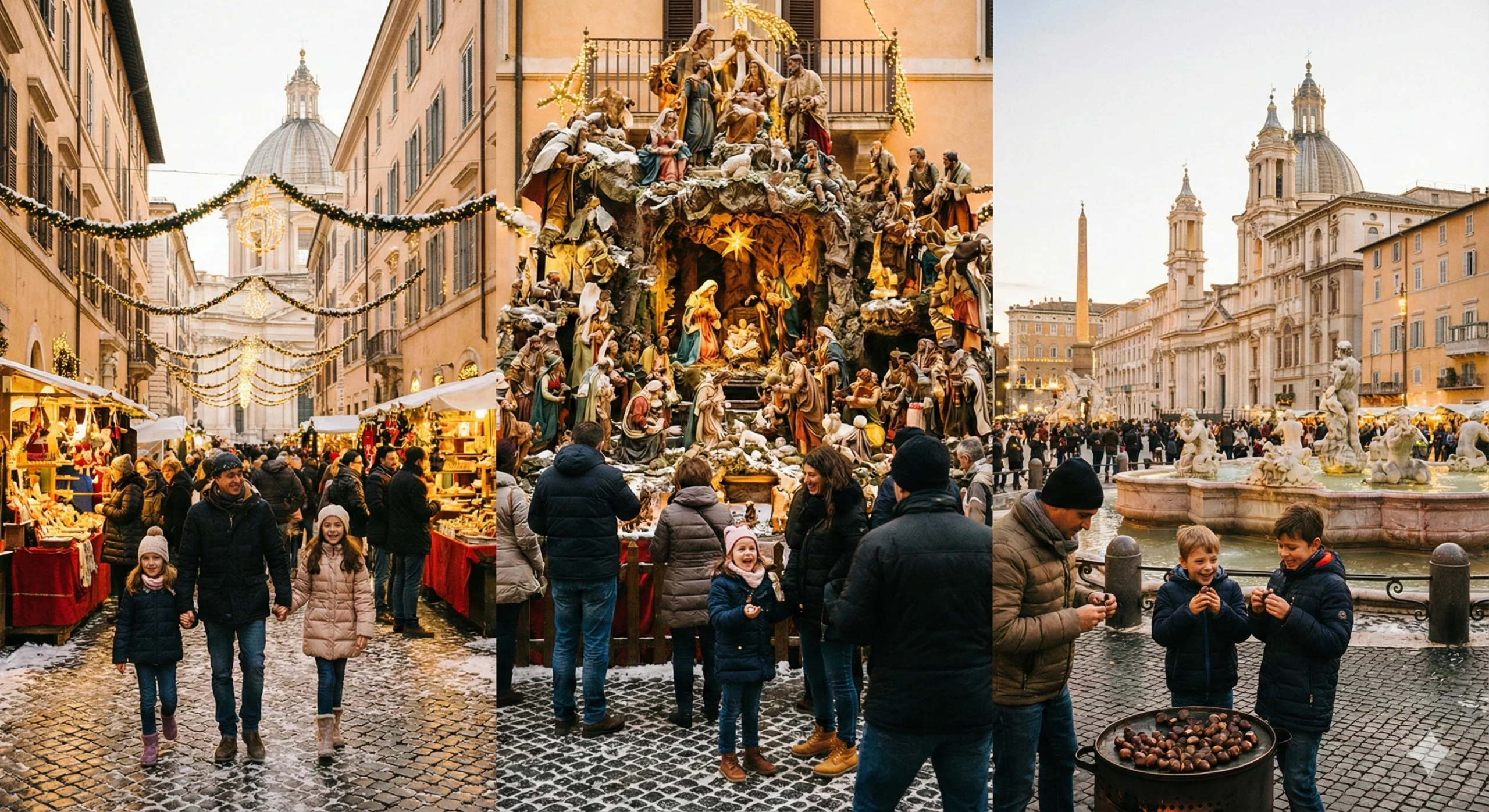
1. Nativity Scenes (Presepe) Everywhere
Nativity scenes are the heart of Italian Christmas. The most elaborate can be seen in:
- Naples (Presepi in Via San Gregorio Armeno)
- Rome (Vatican Nativity Scene)
- Florence and Sicily
Some include real animals, moving figures, fountains, or miniature villages.
2. Christmas Markets (Mercatini di Natale)
From late November until January, Italy transforms into a winter wonderland:
- Bolzano hosts the biggest Christmas market
- Verona, Florence, Rome, Milan, Turin, and Naples hold famous markets
- You’ll find local crafts, pastries, mulled wine, ornaments, and gifts
3. Midnight Mass on Christmas Eve
Millions attend Midnight Mass, especially in:
- The Vatican (St. Peter’s Basilica)
- Local churches across the country
It’s a sacred and emotional moment marking the birth of Jesus.
4. Family Dinners & Reunions
Christmas is considered a time for being together, so families gather for large meals that last hours.
5. La Befana – The Gift-Giving Witch
On January 6, a kind, broom-riding old woman (La Befana) delivers gifts to children.
She predates Santa Claus in Italian folklore.
6. Fireworks and Street Celebrations
Romans and Neapolitans especially love grand firework displays for New Year’s.
Italy Christmas Traditions (Full Breakdown)
Italy has countless Christmas customs, many of which differ from one region to another. Below is a full list of the most important Italy Christmas traditions and Italian Christmas traditions:
1. Presepe – Traditional Nativity Scenes
These are not just decorations — they’re an art form.
Types of Nativity Scenes in Italy:
- Presepe Vivente: Live nativity with actors
- Presepe Napoletano: Naples-style, includes everyday villagers, shops, and rivers
- Modern Presepe: Creative displays with lights and moving parts
Some families pass down their nativity sets for generations.
2. The Feast of the Seven Fishes
On Christmas Eve, many Italians avoid meat and serve fish-based meals.
Typical seafood dishes:
- Fried calamari
- Baccalà (salted cod)
- Clams and mussels
- Shrimp pasta
- Grilled or baked fish
This tradition is especially strong in Southern Italy.
3. Italian Christmas Witch – La Befana
On January 6, La Befana gives gifts to children. She leaves:
- Candy for good kids
- Coal (usually sweet candy-coal) for naughty ones
Children hang stockings for her, similar to Santa.
4. Tombola – Italian Christmas Bingo
Families often play Tombola, a traditional Italian game like Bingo.
It’s fun, noisy, and perfect after Christmas lunch.
5. Christmas Day Lunch (Pranzo di Natale)
Regional dishes vary, but common items include:
- Lasagna or tortellini
- Roasted meats (lamb, pork, beef)
- Side dishes with potatoes and vegetables
- Panettone and Pandoro
What Do Italians Eat for Christmas? (Detailed Food Guide)
Italian Christmas meals are legendary. Every region has its own specialties, but here is the full list of foods Italians enjoy.
Christmas Eve (La Vigilia) – Seafood Feast
No meat is eaten. Popular dishes include:
- Fried calamari
- Spaghetti alle vongole (clams)
- Baccalà (salted cod)
- Octopus salad
- Seafood risotto
Christmas Day Lunch (Pranzo di Natale)
The biggest feast of the season.
Typical dishes:
- Antipasti: cured meats, cheeses, olives, bruschetta
- Primo (first course): lasagna, cannelloni, tortellini in broth, ravioli
- Secondo (main course): roasted lamb, pork, beef, or chicken
- Contorni: potatoes, sautéed vegetables
- Dolci (desserts): Panettone, Pandoro, Torrone, Struffoli
Desserts Italians Eat for Christmas
- Panettone (Milanese bread with raisins)
- Pandoro (sweet golden cake from Verona)
- Torrone (nougat)
- Struffoli (honey dough balls from Naples)
- Ricciarelli (almond cookies from Siena)
- Panforte (spiced fruit cake from Tuscany)
Recipes for Christmas in Italy (Extended List)
Here are more traditional recipes for Christmas in Italy that are popular across regions:
🥘 Pasta Dishes
- Tortellini in brodo (Bologna)
- Lasagne al forno (Emilia-Romagna)
- Pappardelle with wild boar (Tuscany)
🍖 Meat Dishes
- Arrosto di vitello (veal roast)
- Maiale arrosto (roasted pork)
- Agnello al forno (oven-baked lamb)
🍞 Traditional Breads & Sweets
- Panettone
- Pandoro
- Cavallucci
- Panforte
- Zeppole
🍷 Drinks
- Vin brulé (Italian mulled wine)
- Grappa
- Sweet dessert wines
Fun Facts About Christmas in Italy
Here are some surprising and fun facts about Christmas in Italy:
- Italy created the first nativity scene ever, by St. Francis of Assisi in 1223.
- In some regions, Santa Claus isn’t the main gift-giver — La Befana or Baby Jesus brings gifts.
- Italy has hundreds of Christmas markets, some open for six weeks.
- Panettone is so popular that Italy produces millions of them every year.
- Rome hosts one of the world’s largest Midnight Masses in Vatican City.
- Italians exchange gifts gradually — not all at once like other countries.
- Naples is considered the birthplace of modern nativity art.
- In northern Italy, children receive gifts on December 13 from Santa Lucia.
- Italy’s Christmas lights displays are among the most artistic in Europe.
How to Say Merry Christmas in Italian
The Italian phrase for Merry Christmas is simple and beautiful:
🎄 “Buon Natale”
= “Merry Christmas”
You can say it casually to strangers, family members, colleagues, or anyone celebrating.
Merry Christmas in Italian: Full Language Guide
How do you say Merry Christmas in Italian?
Buon Natale
How to say Merry Christmas in Italian?
The correct phrase is Buon Natale
How do you say Christmas in Italy?
The word is Natale, meaning “birth.”
Other festive Italian phrases:
- Felice Anno Nuovo – Happy New Year
- Buone Feste – Happy Holidays
- Auguri! – Best wishes
You may also like to read: Christmas Dinner Ideas for a Large Group: Easy Menu Ideas
Final Thoughts: Why Christmas in Italy Is Special
Christmas in Italy is more than just a holiday — it’s a deeply meaningful cultural celebration full of history, warmth, and delicious food. Whether you’re fascinated by the unique Italian Christmas traditions, curious about what Italians eat, or simply wanted to learn how to say Merry Christmas in Italian, this guide gives you everything you need.
Italy’s blend of faith, family unity, festive markets, nativity art, and unforgettable meals makes it one of the most magical Christmas destinations in the world.
And now you can greet anyone like a true Italian:
Buon Natale! 🇮🇹
FAQs
FAQ 1: How long is the Christmas season in Italy?
The Christmas season in Italy begins on December 8 with the Feast of the Immaculate Conception and ends on January 6 with the Epiphany. This makes it one of the longest festive seasons in Europe.
FAQ 2: What is the most common Christmas tradition in Italy?
The most common tradition is the Presepe, or nativity scene, which is displayed in homes, churches, and public squares across the country.
FAQ 3: Do Italians celebrate Christmas with Santa Claus?
Some regions recognize Santa Claus, but many Italian families rely on La Befana, a friendly witch who brings gifts on January 6.
FAQ 4: What food is served at an Italian Christmas dinner?
Christmas Day dinner includes lasagna, tortellini, roasted meats, potatoes, vegetables, and desserts like Panettone, Pandoro, and Torrone.
FAQ 5: How do you say Merry Christmas in Italian?
“Merry Christmas” in Italian is Buon Natale.
FAQ 6: Why do Italians eat seafood on Christmas Eve?
Many Italians avoid meat on Christmas Eve for religious reasons, so seafood became the traditional choice, especially in southern Italy.
FAQ 7: What is the role of La Befana in Italy?
La Befana is a kind old woman who delivers gifts to children on the night of January 5, celebrated during the Epiphany on January 6.