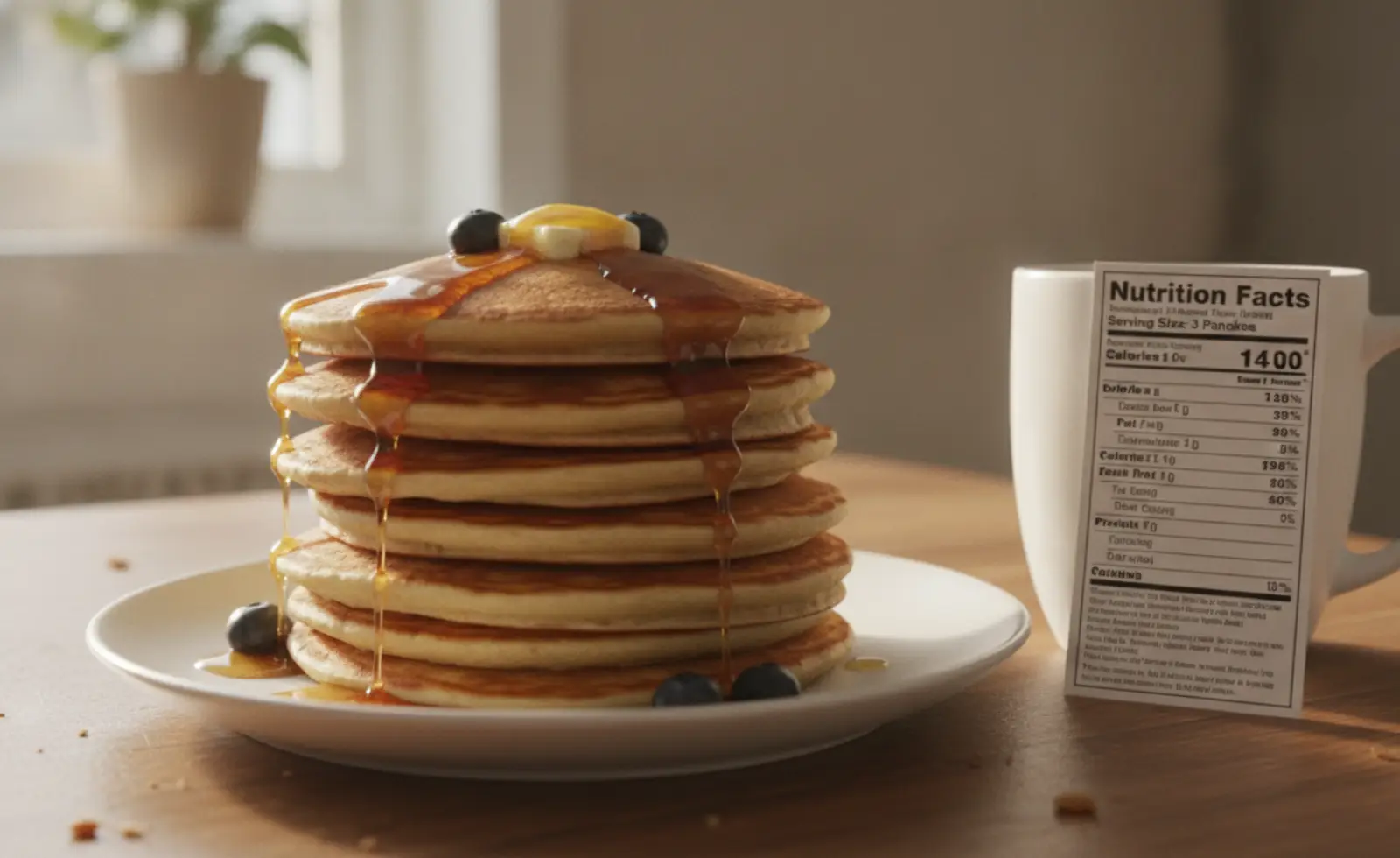
Nutrition facts on pancakes vary more than most people expect, since a stack made from a heavily processed boxed mix loaded with syrup looks nothing like a protein-forward version made from scratch, even though both technically count as “pancakes.” The cooking method stays roughly the same across versions, but the ingredients underneath determine whether you’re looking at a light breakfast or a dessert-level calorie and sugar load. Below is a breakdown of what actually drives those numbers, plus five recipes — each with its own ingredients table — ranging from a classic version to higher-protein and lower-sugar alternatives.
How to Read Nutrition Facts on Pancakes (Mix vs. Homemade)
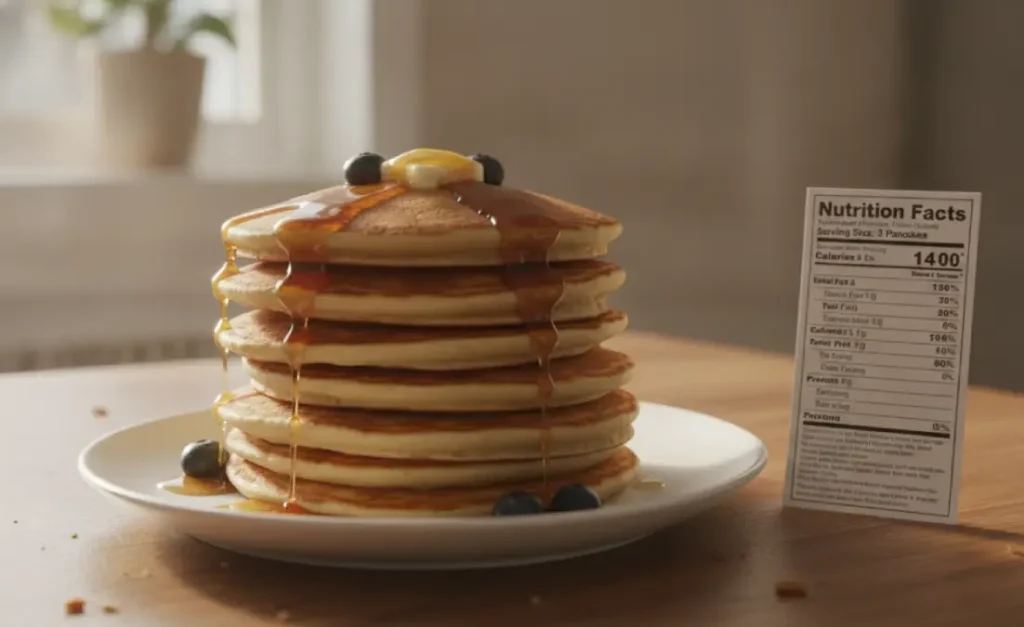
Boxed pancake mix nutrition labels are usually listed per a small number of pancakes — often two to three — which can be misleading if you typically eat a full stack of four or five. From there, the carbohydrate and added sugar lines matter most, since refined flour and added sugar in the mix itself (before syrup is even added) can already push a serving higher than expected. Protein content on most standard mixes is fairly low, generally in the 3–6 gram range per labeled serving, since the formula leans on flour rather than protein-rich ingredients. Understanding the basics of standard nutrition facts labeling makes it much easier to compare a boxed mix against a homemade recipe accurately, rather than assuming “homemade” automatically means healthier.
What Typically Drives the Calorie and Sugar Count Up
A handful of specific additions are usually responsible for most of the difference between a moderate pancake breakfast and a much heavier one:
- Syrup: A typical serving of syrup can add more sugar to the meal than the pancakes themselves, especially with restaurant-style generous pours.
- Butter: Both melted into the batter and added on top, butter contributes meaningfully to total fat and calories without adding much protein.
- Restaurant portion sizes: A “stack” at many restaurants is often three to four large pancakes, which is a noticeably bigger serving than the two-pancake portion many mix labels are based on.
- Mix-ins: Chocolate chips, candied toppings, or flavored syrups can add significant additional sugar on top of the base recipe.
For more context on how added sugar specifically affects overall nutrition, see this general overview of carbohydrates and added sugar.
Classic vs. Healthier Pancake Recipes
These two recipes show the difference a few ingredient swaps can make while keeping the same basic technique.
Classic Buttermilk Pancakes
| Ingredient | Amount |
|---|---|
| All-purpose flour | 1 1/2 cups |
| Buttermilk | 1 1/4 cups |
| Egg | 1 large |
| Sugar | 2 tbsp |
| Butter, melted | 2 tbsp |
| Baking powder | 1 1/2 tsp |
- Whisk buttermilk, egg, sugar, and melted butter together until combined.
- Fold in flour and baking powder until just combined, leaving some small lumps.
- Cook on a greased skillet over medium heat for 2–3 minutes per side, until golden.
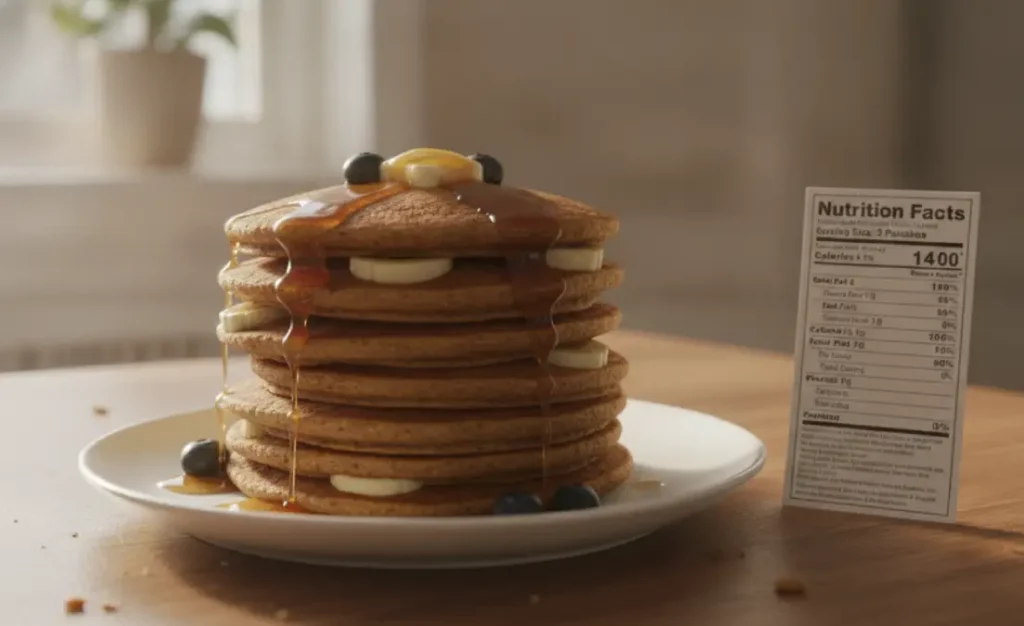
Whole Wheat Banana Pancakes (Lower Sugar)
| Ingredient | Amount |
|---|---|
| Whole wheat flour | 1 1/2 cups |
| Milk | 1 1/4 cups |
| Mashed ripe banana | 1/2 cup |
| Egg | 1 large |
| Baking powder | 1 1/2 tsp |
| Cinnamon | 1/2 tsp |
- Whisk milk, mashed banana, and egg together until mostly smooth.
- Fold in flour, baking powder, and cinnamon until just combined.
- Cook on a greased skillet over medium heat for 2–3 minutes per side.
High-Protein and Quick Pancake Recipes
These two recipes lean toward a higher protein count or faster prep time. For more high-protein breakfast ideas, see our high-protein snack guide.
Protein Pancakes (Greek Yogurt)
| Ingredient | Amount |
|---|---|
| Plain Greek yogurt | 1/2 cup |
| All-purpose flour | 1 cup |
| Eggs | 2 large |
| Milk | 1/4 cup |
| Baking powder | 1 tsp |
| Honey | 1 tbsp |
- Whisk Greek yogurt, eggs, milk, and honey together until smooth.
- Fold in flour and baking powder until just combined.
- Cook on a greased skillet over medium heat for 2–3 minutes per side, until golden.
3-Ingredient Banana Pancakes
| Ingredient | Amount |
|---|---|
| Ripe bananas, mashed | 2 medium |
| Eggs | 2 large |
| Cinnamon (optional) | 1/4 tsp |
- Whisk mashed banana, eggs, and cinnamon together until well combined.
- Pour small portions onto a greased skillet over medium-low heat.
- Cook for 2 minutes per side, flipping gently since this batter is more delicate than flour-based versions.
A Decadent Pancake Recipe Worth Tracking Separately
Chocolate Chip Pancakes
| Ingredient | Amount |
|---|---|
| All-purpose flour | 1 1/2 cups |
| Milk | 1 1/4 cups |
| Egg | 1 large |
| Sugar | 3 tbsp |
| Butter, melted | 2 tbsp |
| Baking powder | 1 1/2 tsp |
| Chocolate chips | 1/3 cup |
- Whisk milk, egg, sugar, and melted butter together until combined.
- Fold in flour and baking powder, then gently fold in chocolate chips.
- Cook on a greased skillet over medium heat for 2–3 minutes per side.
Tips for Making Pancakes That Fit Your Nutrition Goals
A few habits help you adjust any pancake recipe toward your specific goals:
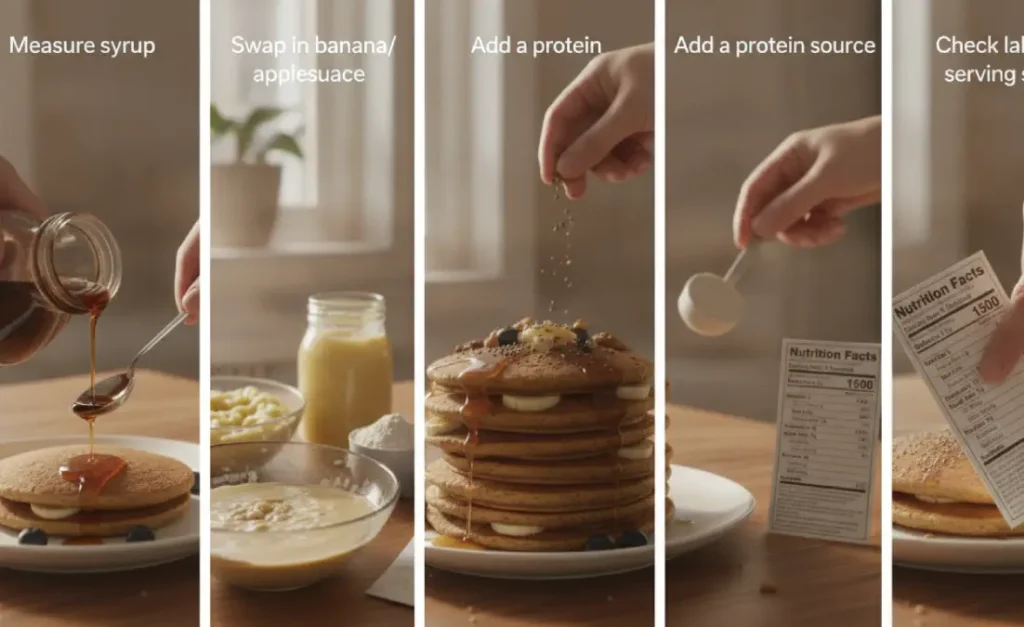
- Measure syrup rather than free-pouring it. A measured 2-tablespoon serving has a very different sugar impact than an unmeasured restaurant-style pour.
- Swap in mashed banana or applesauce for some of the added sugar. Both add natural sweetness and moisture without contributing as much refined sugar.
- Add a protein source if filling power matters to you. Greek yogurt, cottage cheese, or a small scoop of protein powder can all be incorporated into most pancake batters.
- Watch your toppings as closely as the batter itself. Whipped cream, candied nuts, and flavored syrups can add more to the final nutrition count than the pancakes do.
- Compare labels carefully if using a mix. Check the serving size first, since it’s easy to underestimate calories and sugar if you’re eating more than the labeled portion.
Frequently Asked Questions
Q: Are homemade pancakes automatically healthier than boxed mix?
Not necessarily — it depends on the specific recipe. Some homemade versions use more added sugar and butter than a boxed mix, while others, like the whole wheat banana version above, are noticeably lighter.
Q: How much sugar does syrup typically add to a stack of pancakes?
A standard 2-tablespoon serving of regular maple syrup adds a meaningful amount of sugar on its own, often more than the pancakes themselves depending on the recipe.
Q: Which recipe here has the most protein?
The Greek yogurt protein pancake recipe generally has the highest protein content per serving, thanks to both the yogurt and the eggs.
Q: Can I make any of these dairy-free?
Yes, the banana pancakes and 3-ingredient version are naturally dairy-free; the others can be adapted using plant-based milk and butter alternatives.
Q: Why are restaurant pancakes often higher in calories than homemade ones?
This usually comes down to portion size and added butter or syrup rather than the batter itself — restaurant stacks tend to be larger and more generously topped.
Q: Is it better to track pancakes by weight or by count?
Weight tends to be more accurate, since pancake size can vary significantly even within the same recipe, which affects the actual nutrition per piece.
My Expert Opinion
After years of evaluating recipe nutrition breakdowns professionally, my honest take is that most people focus entirely on the batter and overlook toppings, which is usually where the real nutritional swing happens. A modest, well-balanced pancake recipe can still end up as a high-sugar, high-calorie meal once syrup, butter, and whipped cream are added without much thought. My honest recommendation is to treat toppings as part of the recipe, not an afterthought — measure syrup the same way you’d measure any other ingredient, and you’ll get a far more accurate picture of what you’re actually eating than focusing on the batter alone.
Conclusion
Nutrition facts on pancakes depend far more on what goes into and onto them than most people assume, and the gap between a light breakfast and a dessert-level meal often comes down to portion size, sweetener, and toppings rather than the pancakes themselves. Whether you reach for the classic buttermilk version or one of the higher-protein, lower-sugar alternatives above, each ingredients table gives you a clear starting point for understanding exactly what’s in your stack.