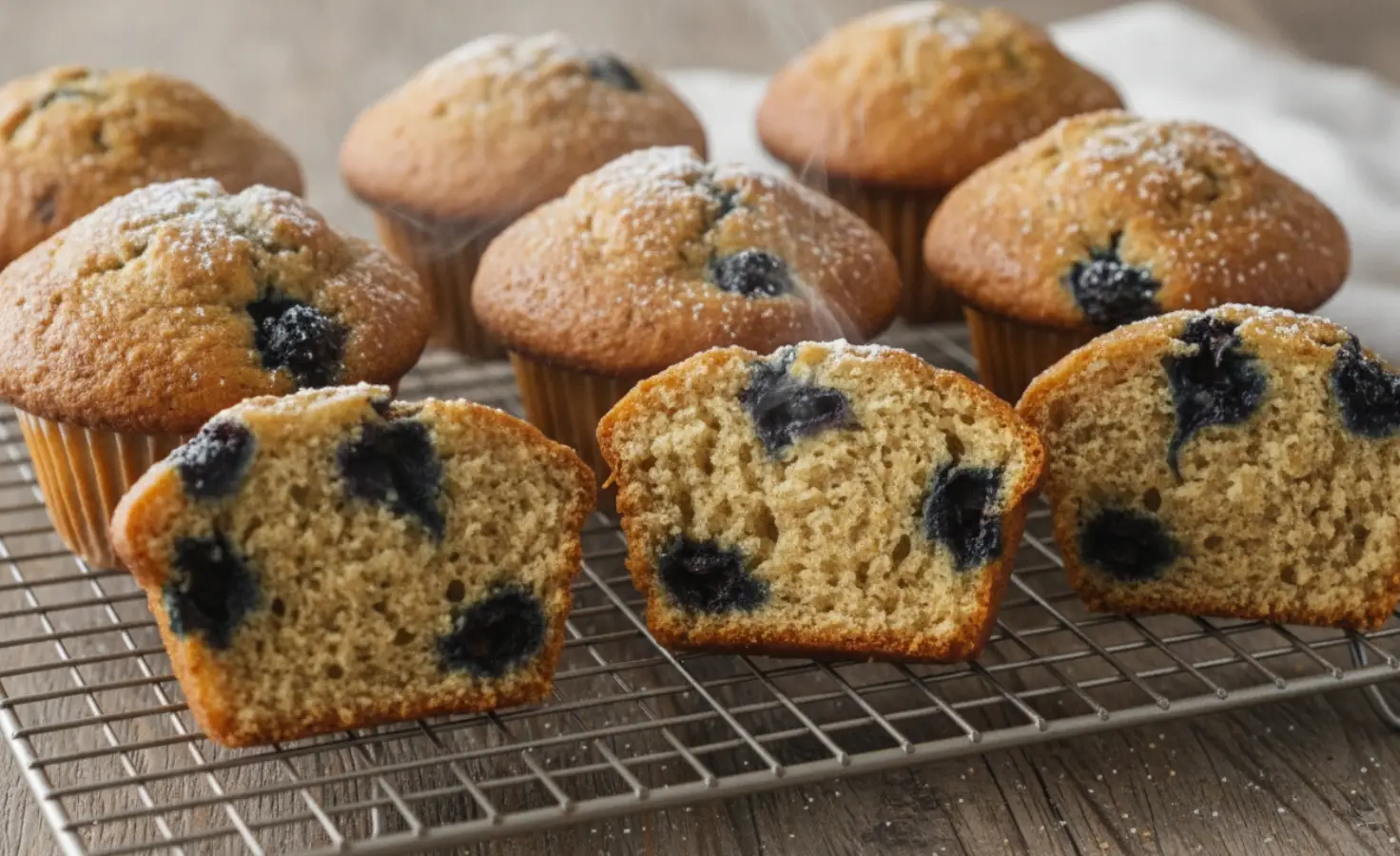
Protein muffins blueberry recipes need to do two things at once — taste like a real bakery muffin and actually deliver enough protein to keep you satisfied until your next meal. Blueberries make this easier than most other mix-ins, since their natural moisture and sweetness help offset the drying effect protein powder can have on baked goods. Below are five complete recipes, each with its own ingredients table, covering a classic whey-based muffin, a Greek yogurt version, a fully vegan option, a quick mug muffin, and one more bakery-style version with a streusel topping.
What Makes a Muffin a “Protein” Muffin?
A standard blueberry muffin relies mostly on flour, sugar, butter, and eggs for its structure, with very little meaningful protein beyond the eggs themselves. A protein version shifts that balance by swapping in protein powder, Greek yogurt, or cottage cheese for some of the flour or fat, while leaning on blueberries and a bit of extra moisture to keep the crumb tender. Protein’s role in supporting fullness between meals is well documented in research on macronutrients and satiety, which is part of why a protein-boosted muffin tends to hold you over longer than a bakery-style one of the same size.
The main challenge is moisture, since protein powder absorbs more liquid than flour does. Without adjusting for that, muffins can turn out dry or slightly rubbery — which is exactly why each recipe below leans on specific ratios rather than a simple flour swap.

Choosing the Right Protein Source and Why Blueberries Work So Well
Different protein sources behave differently once baked, and blueberries happen to pair well with nearly all of them.
- Whey protein powder: Produces a texture closest to a traditional muffin, with a slightly denser, more cake-like crumb.
- Greek yogurt: Adds protein along with moisture and a mild tang that complements blueberries particularly well.
- Plant-based protein powder: Absorbs more liquid than whey, so vegan recipes typically need a bit more oil or yogurt alternative to stay moist.
- Cottage cheese, blended smooth: Adds protein with minimal flavor impact once blended, making it a good neutral option.
Blueberries themselves release a small amount of natural juice as they bake, which helps counteract some of the drying effect of protein powder — one reason this particular fruit works especially well in protein baking. For more on adjusting ratios when substituting ingredients, see our notes on ingredient substitution ratios in baking, or check out our protein powder baking guide for more background.
Classic Protein Blueberry Muffin Recipes
These two recipes are the most traditional starting point — one whey-based, one built around Greek yogurt.
Whey Protein Blueberry Muffins
| Ingredient | Amount |
|---|---|
| Vanilla whey protein powder | 1/2 cup |
| All-purpose flour | 1 cup |
| Eggs | 2 large |
| Milk | 1/2 cup |
| Honey or maple syrup | 1/3 cup |
| Baking powder | 1 1/2 tsp |
| Fresh blueberries | 1 cup |
- Whisk eggs, milk, and honey together until smooth.
- Fold in protein powder, flour, and baking powder until just combined.
- Gently fold in blueberries, divide into a lined muffin tin, and bake at 375°F for 18–20 minutes.
Greek Yogurt Blueberry Protein Muffins
| Ingredient | Amount |
|---|---|
| Plain Greek yogurt | 3/4 cup |
| All-purpose flour | 1 1/4 cups |
| Eggs | 2 large |
| Brown sugar | 1/3 cup |
| Baking powder | 1 1/2 tsp |
| Fresh blueberries | 1 cup |
- Whisk Greek yogurt, eggs, and brown sugar together until smooth.
- Fold in flour and baking powder until just combined, taking care not to overmix.
- Gently fold in blueberries and bake at 375°F for 20–22 minutes, until golden on top.
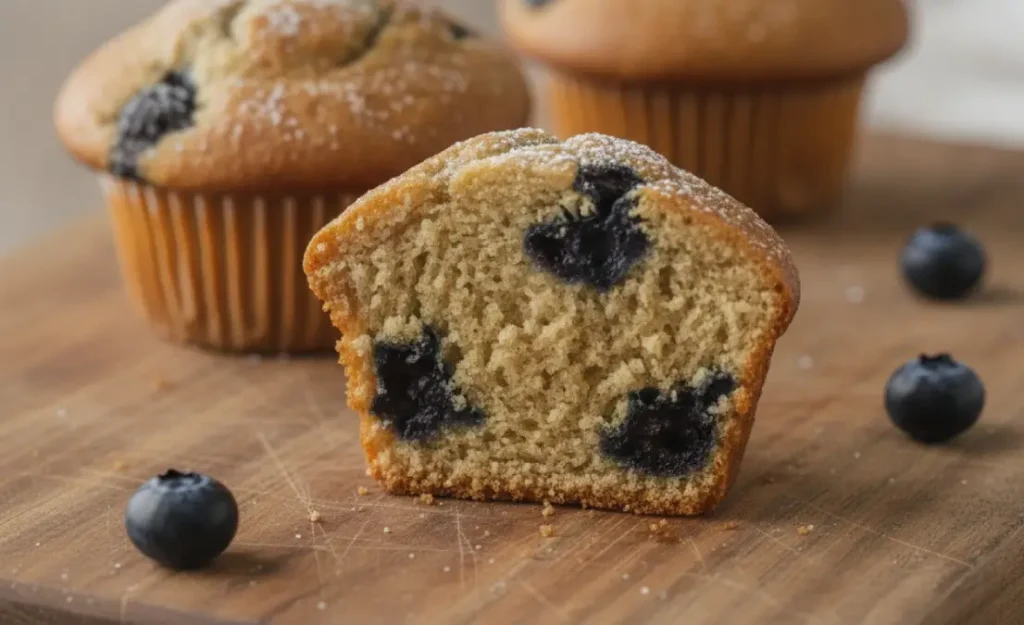
Plant-Based and Quick Protein Blueberry Muffin Recipes
For a fully vegan batch or a single-serving option when you don’t want to bake a whole tray, these two cover both needs. For more ideas in this style, browse our healthy dessert recipes collection.
Vegan Blueberry Protein Muffins
| Ingredient | Amount |
|---|---|
| Plant-based vanilla protein powder | 1/2 cup |
| Whole wheat or all-purpose flour | 1 cup |
| Flax eggs (2 tbsp ground flax + 5 tbsp water) | 1 batch |
| Maple syrup | 1/3 cup |
| Almond milk | 1/3 cup |
| Baking powder | 1 1/2 tsp |
| Fresh blueberries | 1 cup |
- Mix ground flax and water together and let sit for 5 minutes to thicken into a flax egg.
- Whisk flax egg, maple syrup, and almond milk together, then fold in protein powder, flour, and baking powder.
- Gently fold in blueberries and bake at 375°F for 20–22 minutes in a lined muffin tin.
Blueberry Protein Mug Muffin
| Ingredient | Amount |
|---|---|
| Vanilla protein powder | 2 tbsp |
| All-purpose flour | 2 tbsp |
| Milk | 3 tbsp |
| Baking powder | 1/4 tsp |
| Fresh or frozen blueberries | 2 tbsp |
- Whisk protein powder, flour, milk, and baking powder together in a mug until smooth.
- Gently fold in blueberries without overmixing, to avoid streaking the batter purple.
- Microwave for 60–90 seconds, until risen and set in the center.

A Bakery-Style Protein Blueberry Muffin Worth the Extra Effort
If you want something closer to a coffee shop muffin without abandoning the protein boost, this version takes slightly more effort but delivers a noticeably more bakery-style result.
Lemon Blueberry Protein Muffins With Streusel
| Ingredient | Amount |
|---|---|
| Vanilla whey protein powder | 1/2 cup |
| All-purpose flour | 1 cup |
| Plain Greek yogurt | 1/2 cup |
| Eggs | 2 large |
| Honey | 1/3 cup |
| Lemon zest | 1 tsp |
| Baking powder | 1 1/2 tsp |
| Fresh blueberries | 1 cup |
| Oats, brown sugar, and butter (for streusel) | 2 tbsp each |
- Whisk Greek yogurt, eggs, honey, and lemon zest together until smooth.
- Fold in protein powder, flour, and baking powder, then gently fold in blueberries.
- Mix oats, brown sugar, and softened butter into a crumbly streusel, sprinkle over muffins, and bake at 375°F for 20–22 minutes.
Tips for Perfect Protein Blueberry Muffins Every Time
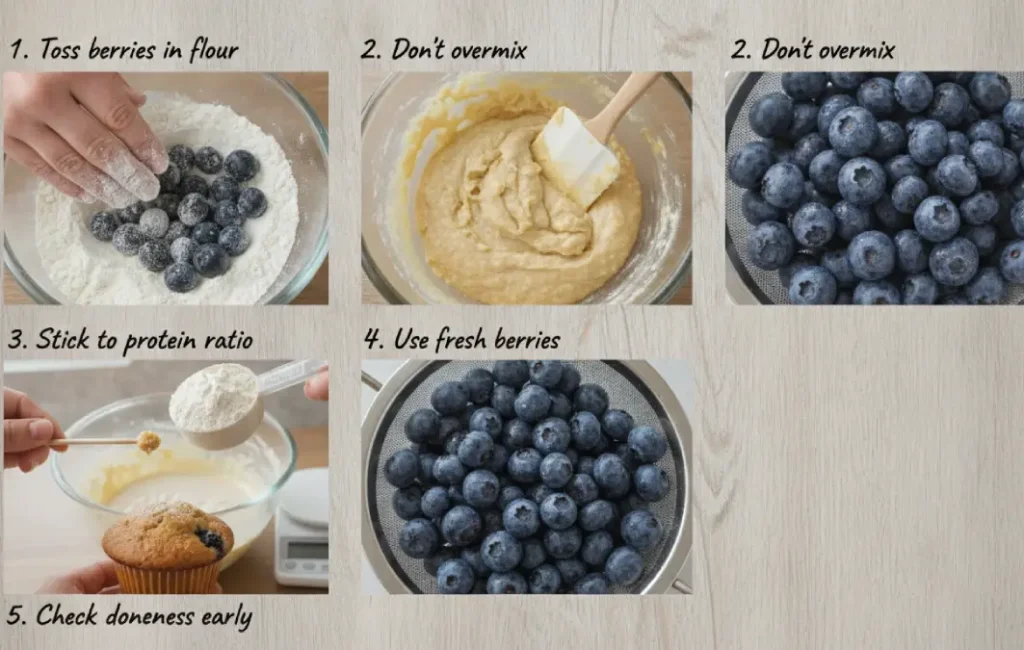
A few small habits make the difference between a moist, bakery-quality muffin and a dry, dense one:
- Toss blueberries in a little flour before folding them in. This helps prevent them from sinking to the bottom of the muffin during baking.
- Don’t overmix once flour is added. Overmixed batter develops gluten that makes muffins tougher and less tender.
- Stick to the recommended amount of protein powder. Going much beyond what’s listed in each recipe tends to dry out the texture, even with blueberries helping offset moisture loss.
- Use fresh blueberries when possible. Frozen berries work in a pinch but can bleed more color into the batter and slightly extend baking time.
- Check doneness a few minutes early. Protein-based batters can look slightly underdone on top while already fully set inside.
Frequently Asked Questions
Q: How much protein does a typical protein blueberry muffin have?
It varies by recipe, but most whey-based versions land between 8–12 grams of protein per muffin, depending on size and protein powder used.
Q: Can I use frozen blueberries instead of fresh?
Yes, just don’t thaw them first — tossing them in frozen helps limit how much they bleed color into the batter.
Q: Why did my muffins turn out dense and dry?
This usually comes down to too much protein powder relative to liquid and fat, or overbaking. Stick close to the ratios above and check a few minutes early.
Q: Can I make these nut-free?
Yes, none of the recipes above require nuts; the vegan version uses almond milk, but any plant-based milk works as a direct substitute.
Q: Can I freeze protein blueberry muffins?
Yes, they freeze well for up to two months in an airtight container; thaw at room temperature or warm briefly in the microwave.
Q: Is the vegan version as moist as the egg-based ones?
It’s close, though flax eggs provide slightly less binding than real eggs, so the vegan batch benefits from cooling fully in the tin before removing.
My Expert Opinion
After years of testing protein-forward baked goods professionally, my honest take is that most people add too much protein powder out of habit, assuming more is automatically better. In reality, blueberries already do a lot of the moisture-retention work, and pushing the protein powder ratio higher than what’s listed above mostly adds dryness rather than meaningful nutritional value. The Greek yogurt version is genuinely underrated — it produces a texture close enough to a traditional bakery muffin that most people wouldn’t guess it was a protein recipe at all. My honest advice is to match the recipe to the moment: the mug muffin for a single quick craving, the lemon streusel version for when you’re serving people who care more about taste than macros.
Conclusion
Protein muffins blueberry recipes prove that boosting the nutritional profile of a bakery favorite doesn’t have to mean sacrificing the moist, tender texture that makes a good blueberry muffin worth eating in the first place. Whether you reach for the classic whey-based version, the quick mug muffin, or the more elaborate lemon streusel recipe, each ingredients table above gives you exactly what you need for a result that holds up — both fresh out of the oven and a few days later from the freezer.