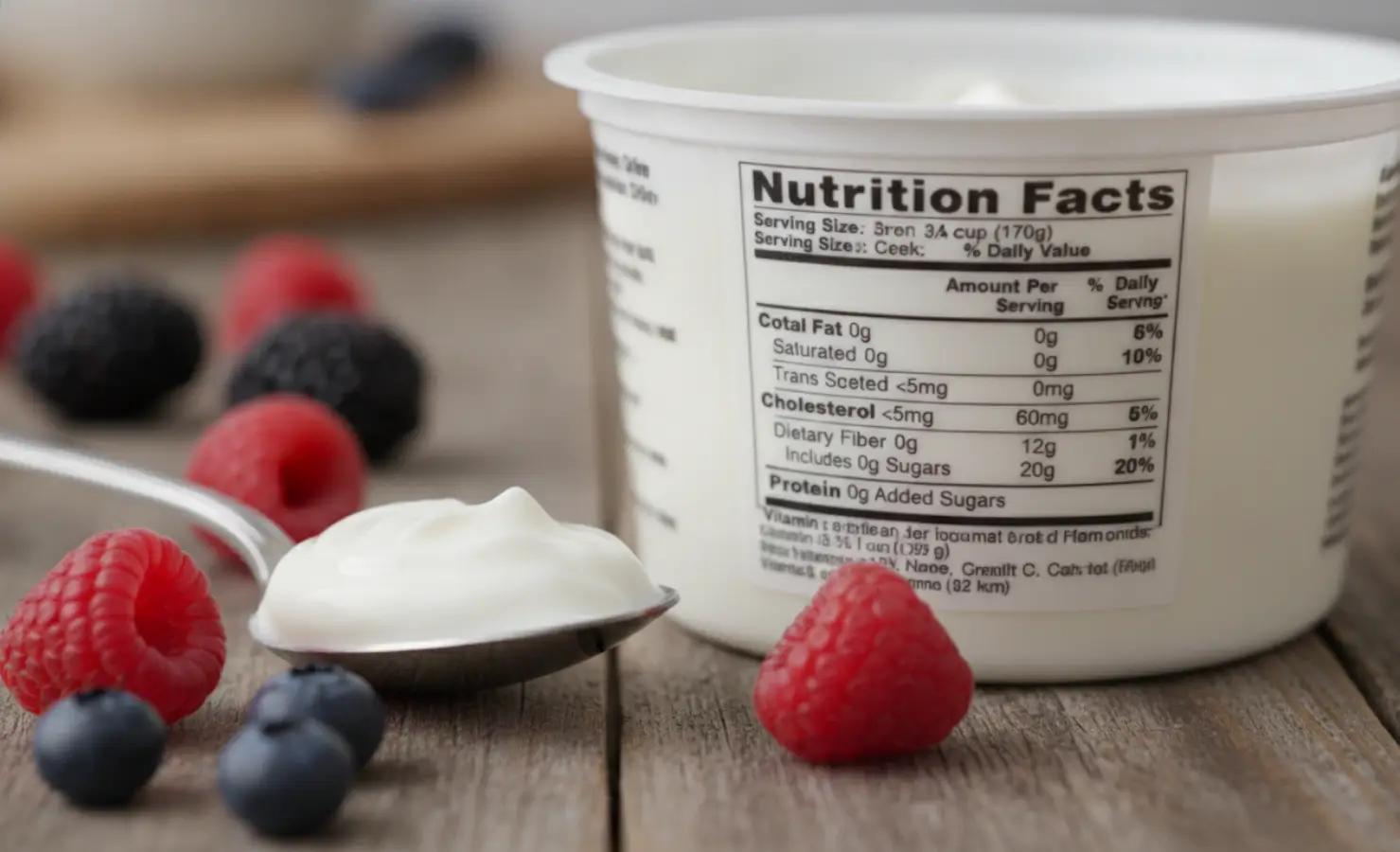
A greek yogurt nutrition label can look deceptively simple at first glance, but knowing exactly what to check — protein per serving, added sugar, and the ingredient list — makes a real difference in choosing the right tub for your goals. Two containers sitting side by side on a shelf can look nearly identical and still have wildly different nutritional profiles once you actually read the fine print. Below, you’ll find a full breakdown of what to look for, plus five recipes — each with its own ingredients table — that make good use of a high-protein tub once you’ve picked one.
How to Read a Greek Yogurt Nutrition Label
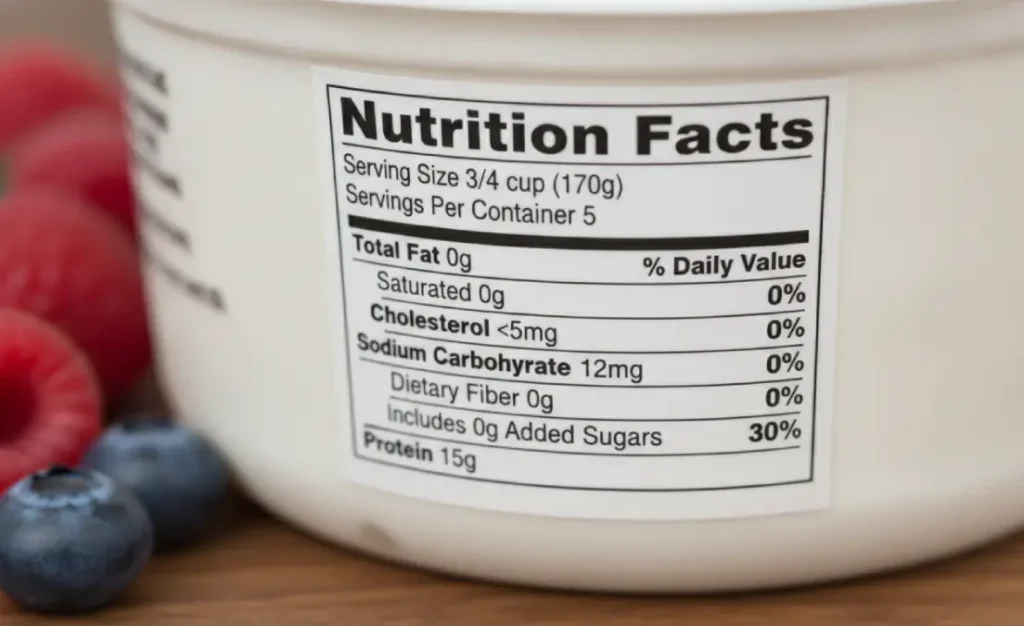
Start at the top with the serving size, since every other number on the label is based on that amount, not necessarily the whole container. From there, the protein line is usually the main reason people choose Greek yogurt in the first place — most plain varieties land somewhere in the 15–20 gram range per typical serving, noticeably higher than regular yogurt. Just below that, the sugar line tells two different stories depending on whether you’re looking at total sugar or added sugar; plain Greek yogurt has naturally occurring lactose sugar even with zero added sugar, while flavored versions often add several extra grams on top of that. Understanding the structure of standard nutrition facts labeling makes it much easier to compare any two yogurts accurately rather than relying on marketing claims on the front of the container.
What to Look For (and What to Avoid) on the Label
A few specific details consistently separate a high-quality Greek yogurt from one that’s Greek-style in name only:
- Protein per serving: Look for at least 12–15 grams per typical serving size as a baseline for a genuinely high-protein product.
- Added sugar line: Plain varieties should show 0 grams of added sugar; flavored versions can range widely, so this line matters more than the front-of-package marketing.
- Short ingredient list: Many plain Greek yogurts list only milk and live cultures — a long list of stabilizers or gums often signals a lower-quality or non-strained product.
- Live and active cultures: This label phrase indicates the yogurt contains probiotic bacteria, which is part of what distinguishes yogurt from other dairy products.
- Fat content variation: Whole-milk, low-fat, and nonfat versions can have meaningfully different calorie and fat numbers even when protein looks similar — check the fat line if that matters for your goals.
For more on how protein content specifically affects how full a food keeps you, see this overview of protein and satiety research.
Comparing Plain vs. Flavored Greek Yogurt Labels
Flavored Greek yogurt almost always trades some of the protein advantage for taste and convenience. A typical flavored cup can carry anywhere from 10 to 20 grams of added sugar, depending on the brand and flavor, while still showing a similar protein number to a plain version. If you genuinely prefer the taste of flavored yogurt, checking the added sugar line — not just the total sugar — gives you a much clearer picture of what you’re actually getting versus adding your own fruit or a small amount of honey to plain yogurt at home.
Greek Yogurt Recipes to Make the Most of a High-Protein Tub
Once you’ve picked a high-quality plain Greek yogurt based on its label, these recipes put it to good use.
Greek Yogurt Berry Parfait
| Ingredient | Amount |
|---|---|
| Plain Greek yogurt | 1 cup |
| Mixed berries | 1 cup |
| Granola | 1/3 cup |
| Honey | 1 tbsp |
- Layer yogurt, berries, and granola in a glass, repeating once more.
- Drizzle honey over the top layer.
- Serve immediately for the best texture contrast between layers.
Greek Yogurt Ranch Dip
| Ingredient | Amount |
|---|---|
| Plain Greek yogurt | 1 cup |
| Garlic powder | 1/2 tsp |
| Onion powder | 1/2 tsp |
| Dried dill | 1 tsp |
| Lemon juice | 1 tsp |
| Salt | 1/4 tsp |
- Stir all seasonings into the yogurt until evenly combined.
- Taste and adjust salt or lemon juice as needed.
- Refrigerate for at least 20 minutes before serving to let the flavors meld.

More Ways to Use Greek Yogurt
Beyond snacking, Greek yogurt works well as a baking ingredient too. For more high-protein ideas, see our high-protein snack ideas.
Greek Yogurt Pancakes
| Ingredient | Amount |
|---|---|
| Plain Greek yogurt | 1/2 cup |
| All-purpose flour | 1 cup |
| Eggs | 2 large |
| Milk | 1/4 cup |
| Baking powder | 1 tsp |
| Honey | 1 tbsp |
- Whisk yogurt, eggs, milk, and honey together until smooth.
- Fold in flour and baking powder until just combined.
- Cook on a greased skillet over medium heat for 2–3 minutes per side, until golden.
Greek Yogurt Chocolate Mousse
| Ingredient | Amount |
|---|---|
| Plain Greek yogurt | 1 cup |
| Cocoa powder | 2 tbsp |
| Honey or maple syrup | 2 tbsp |
| Vanilla extract | 1/2 tsp |
- Whisk yogurt, cocoa powder, honey, and vanilla together until completely smooth.
- Taste and adjust sweetness as needed.
- Chill for at least 15 minutes before serving for a firmer mousse-like texture.

A Savory Recipe Worth Trying
Greek Yogurt Marinated Chicken
| Ingredient | Amount |
|---|---|
| Plain Greek yogurt | 1/2 cup |
| Chicken breast or thighs | 1 lb |
| Lemon juice | 1 tbsp |
| Garlic, minced | 2 cloves |
| Paprika | 1 tsp |
| Salt | 1/2 tsp |
- Combine yogurt, lemon juice, garlic, paprika, and salt in a bowl.
- Coat chicken thoroughly in the marinade and refrigerate for at least 2 hours, or overnight for best results.
- Grill or bake at 400°F until the chicken reaches a safe internal temperature, about 20–25 minutes depending on thickness.
Tips for Choosing the Best Greek Yogurt for Your Goals
A few habits make label-reading faster once you know what you’re looking for:
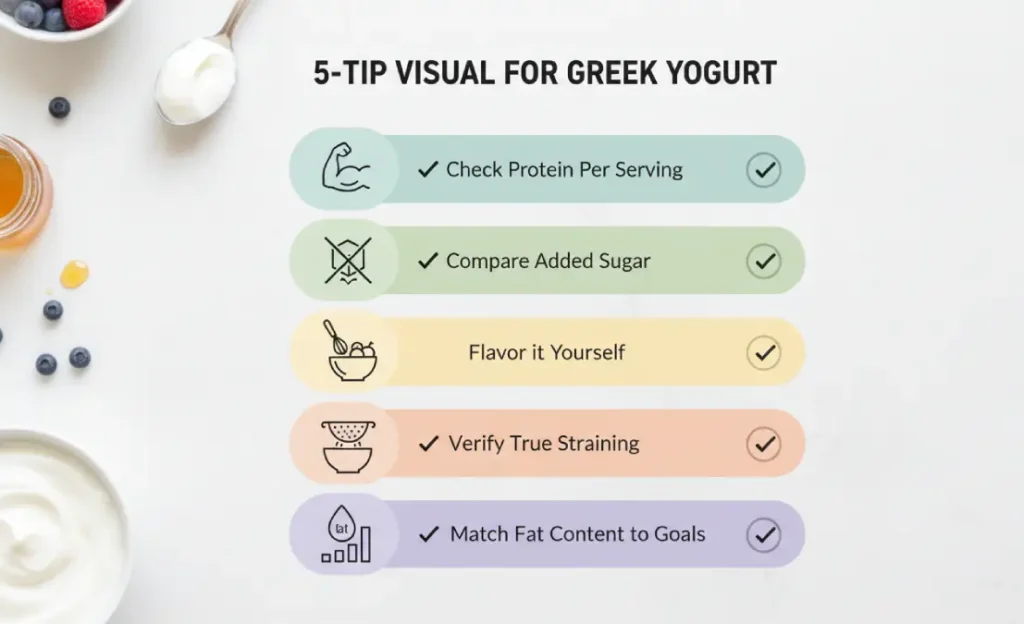
- Always check protein per serving, not per container. Some containers hold more than one serving, which changes the math significantly.
- Compare added sugar, not total sugar, between flavored options. Total sugar includes natural lactose that’s present even in plain yogurt.
- Buy plain and flavor it yourself if sugar is a concern. Adding your own honey or fruit gives you full control over how much sugar ends up in your bowl.
- Don’t assume “Greek-style” means strained the traditional way. Some products use thickeners instead of true straining — the ingredient list will usually reveal which method was used.
- Match fat content to your actual goals. Nonfat isn’t automatically “better” for everyone; whole-milk versions can fit perfectly well into many balanced diets.
Frequently Asked Questions
Q: Why does Greek yogurt have more protein than regular yogurt?
Greek yogurt is strained to remove excess whey and liquid, which concentrates the remaining protein into a smaller, thicker serving.
Q: Is nonfat Greek yogurt always the healthiest choice?
Not necessarily — it depends on your goals. Nonfat versions have less fat and slightly fewer calories, but whole-milk versions can be more satisfying and fit well into many balanced diets.
Q: What does “live and active cultures” actually mean on the label?
It indicates the yogurt contains probiotic bacteria that were alive at the time of packaging, which is part of what gives yogurt its characteristic tang and potential digestive benefits.
Q: How can I tell if a brand is using thickeners instead of true straining?
Check the ingredient list — traditionally strained Greek yogurt typically lists just milk and cultures, while versions with added pectin, gelatin, or starches are usually thickened rather than strained.
Q: Is flavored Greek yogurt a bad choice if I’m watching sugar intake?
Not automatically, but it’s worth comparing the added sugar line across a few brands, since amounts vary significantly even among similar-sounding flavors.
Q: Can I substitute Greek yogurt for sour cream in recipes?
Yes, in most savory recipes it works as a near 1:1 substitute, adding protein with a similar tangy flavor and creamy texture.
My Expert Opinion
After years of evaluating nutrition labels professionally, my honest opinion is that most people glance at the protein number on a Greek yogurt label and stop reading right there — and that’s exactly how a lot of added sugar slips through unnoticed. A yogurt boasting “20 grams of protein” on the front of the package can still carry a surprising amount of added sugar if it’s a flavored variety, and the only way to catch that is checking the actual nutrition facts panel rather than the marketing copy. My honest recommendation is to build a habit around plain Greek yogurt specifically — it gives you full control over sweetness, and once you’ve tried the parfait or mousse recipes above, you may not miss the pre-flavored versions nearly as much as you’d expect.
Conclusion
Reading a greek yogurt nutrition label thoroughly — not just glancing at the protein number — gives you a much clearer picture of what you’re actually buying, especially when comparing plain versus flavored options. Once you’ve found a high-quality tub you trust, the five recipes above, each with its own ingredients table, give you plenty of ways to use it beyond eating it plain straight from the container.