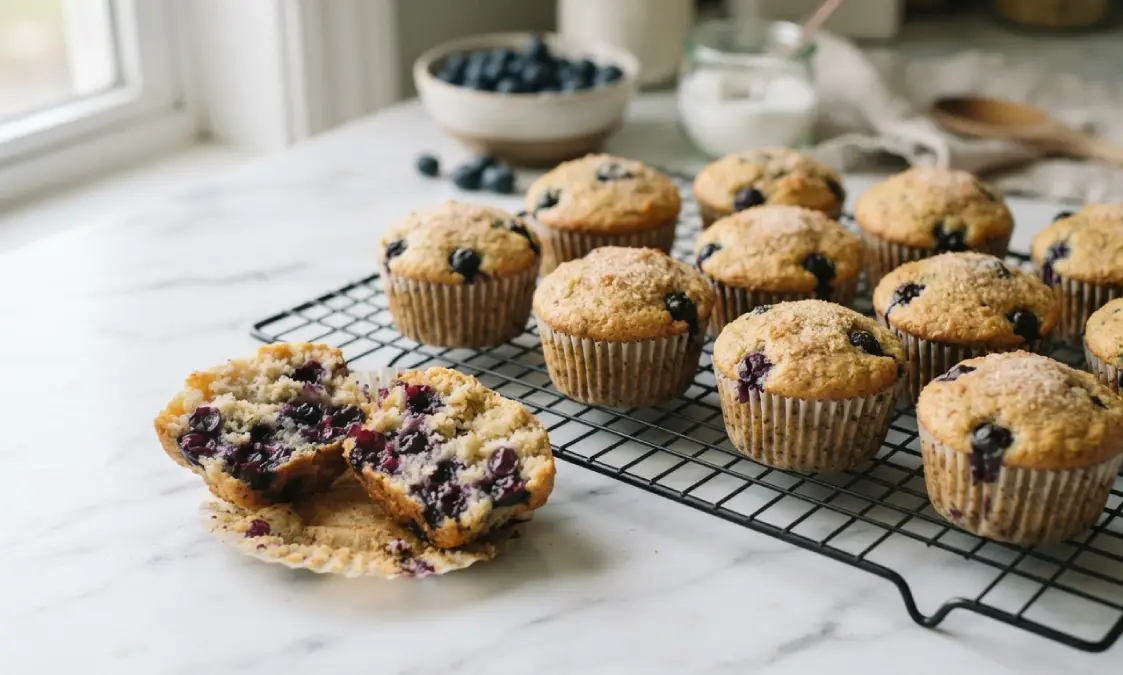
Keto blueberry muffins are one of those recipes that sounds like a compromise until you actually make a good version — at which point they become a permanent fixture in your weekly baking rotation. The challenge isn’t the blueberries, which are relatively low in carbs for a fruit, but the flour swap: almond flour and coconut flour behave very differently from all-purpose flour, and getting the right ratio of each is what separates a muffin with a real crumb from one that’s dense and eggy. Below are five complete recipes, each with its own ingredients table, covering a classic almond flour base, a coconut flour version, a dairy-free option, a cream cheese-swirled variation, and one lemon blueberry version for a brighter flavor profile.
What Makes a Blueberry Muffin Truly “Keto”?
A standard blueberry muffin is built almost entirely on all-purpose flour and sugar — both of which contribute significant carbohydrates per serving. A keto version replaces those with low-carb flours like almond or coconut flour, and swaps sugar for a zero-glycemic sweetener like erythritol or monk fruit. Blueberries themselves are one of the more keto-friendly fruits since they’re relatively low in net carbs compared to other berries, though portion size still matters. The broader principles behind ketogenic eating emphasize keeping net carbs (total carbs minus fiber) low per serving, which means checking the flour and sweetener you choose matters just as much as the blueberry count in each muffin.
The texture challenge is real but solvable. Almond flour produces a slightly denser, moister crumb than wheat flour, while coconut flour absorbs dramatically more liquid, which is why you’ll notice the coconut flour recipe below uses far less flour by volume than the almond flour version.

Choosing Between Almond Flour and Coconut Flour
This is the most important decision in keto muffin baking, and the two flours are not interchangeable in the same recipe without significant adjustments.
- Almond flour: Higher in fat, produces a moister, more cake-like crumb, and is more forgiving for beginners. Use blanched almond flour, not almond meal, for the smoothest texture.
- Coconut flour: Much more absorbent — a recipe that uses 2 cups of almond flour might only need 1/3 cup of coconut flour. Produces a slightly lighter, more bread-like texture when used correctly.
- Sweetener choice: Erythritol, monk fruit, and allulose are the most commonly used keto sweeteners in baking. Allulose tends to produce the most browning and the softest texture when baked.
For more background on substituting keto-friendly flours in baking, see our keto baking guide, or this overview of how low-carb flours behave differently in baking.
Classic Keto Blueberry Muffin Recipes
These two are the most reliable starting points — one built on almond flour, one on coconut flour.
Classic Almond Flour Keto Blueberry Muffins
| Ingredient | Amount |
|---|---|
| Blanched almond flour | 2 cups |
| Eggs | 3 large |
| Butter, melted | 1/3 cup |
| Erythritol or monk fruit sweetener | 1/2 cup |
| Baking powder | 1 1/2 tsp |
| Vanilla extract | 1 tsp |
| Fresh blueberries | 3/4 cup |
- Whisk eggs, melted butter, sweetener, and vanilla together until well combined.
- Fold in almond flour and baking powder until just combined, then gently fold in blueberries.
- Divide into a lined muffin tin and bake at 350°F for 20–22 minutes, until golden and a toothpick comes out clean.
Coconut Flour Keto Blueberry Muffins
| Ingredient | Amount |
|---|---|
| Coconut flour | 1/3 cup |
| Eggs | 4 large |
| Butter, melted | 1/4 cup |
| Erythritol or monk fruit sweetener | 1/3 cup |
| Baking powder | 1 tsp |
| Vanilla extract | 1 tsp |
| Fresh blueberries | 1/2 cup |
- Whisk eggs, melted butter, sweetener, and vanilla together until smooth.
- Fold in coconut flour and baking powder, then let the batter rest for 2 minutes to allow the coconut flour to fully absorb the liquid.
- Gently fold in blueberries, divide into a lined muffin tin, and bake at 350°F for 18–20 minutes.

Dairy-Free and Flavored Keto Blueberry Muffin Recipes
For a fully dairy-free batch or a more complex flavor variation, these two options cover both directions. For more keto-friendly dessert ideas, browse our keto dessert recipes collection.
Dairy-Free Keto Blueberry Muffins
| Ingredient | Amount |
|---|---|
| Blanched almond flour | 2 cups |
| Eggs | 3 large |
| Coconut oil, melted | 1/3 cup |
| Monk fruit sweetener | 1/2 cup |
| Baking powder | 1 1/2 tsp |
| Vanilla extract | 1 tsp |
| Fresh blueberries | 3/4 cup |
- Whisk eggs, melted coconut oil, sweetener, and vanilla together until combined.
- Fold in almond flour and baking powder until just combined, then gently fold in blueberries.
- Bake at 350°F for 20–22 minutes in a lined muffin tin until lightly golden.
Lemon Blueberry Keto Muffins
| Ingredient | Amount |
|---|---|
| Blanched almond flour | 2 cups |
| Eggs | 3 large |
| Butter, melted | 1/3 cup |
| Erythritol or monk fruit sweetener | 1/2 cup |
| Lemon zest | 1 tbsp |
| Lemon juice | 1 tbsp |
| Baking powder | 1 1/2 tsp |
| Fresh blueberries | 3/4 cup |
- Whisk eggs, melted butter, sweetener, lemon zest, and lemon juice together until combined.
- Fold in almond flour and baking powder until just combined, then gently fold in blueberries.
- Bake at 350°F for 20–22 minutes, until the tops are lightly golden and spring back when gently pressed.

A Decadent Keto Blueberry Muffin Worth the Extra Effort
Cream Cheese Swirl Keto Blueberry Muffins
| Ingredient | Amount |
|---|---|
| Blanched almond flour | 2 cups |
| Eggs | 3 large |
| Butter, melted | 1/3 cup |
| Erythritol or monk fruit sweetener | 1/2 cup |
| Baking powder | 1 1/2 tsp |
| Vanilla extract | 1 tsp |
| Fresh blueberries | 3/4 cup |
| Cream cheese, softened | 4 oz |
| Sweetener (for cream cheese) | 2 tbsp |
- Mix softened cream cheese with 2 tablespoons of sweetener until smooth; set aside.
- Prepare the base muffin batter as in the classic recipe above, folding in blueberries last.
- Fill muffin cups halfway with batter, add a spoonful of cream cheese mixture, top with remaining batter, and swirl gently with a toothpick before baking at 350°F for 22–24 minutes.
Tips for Perfect Keto Blueberry Muffins Every Time
A few habits make the difference between a muffin that holds together and one that crumbles the moment you pick it up:
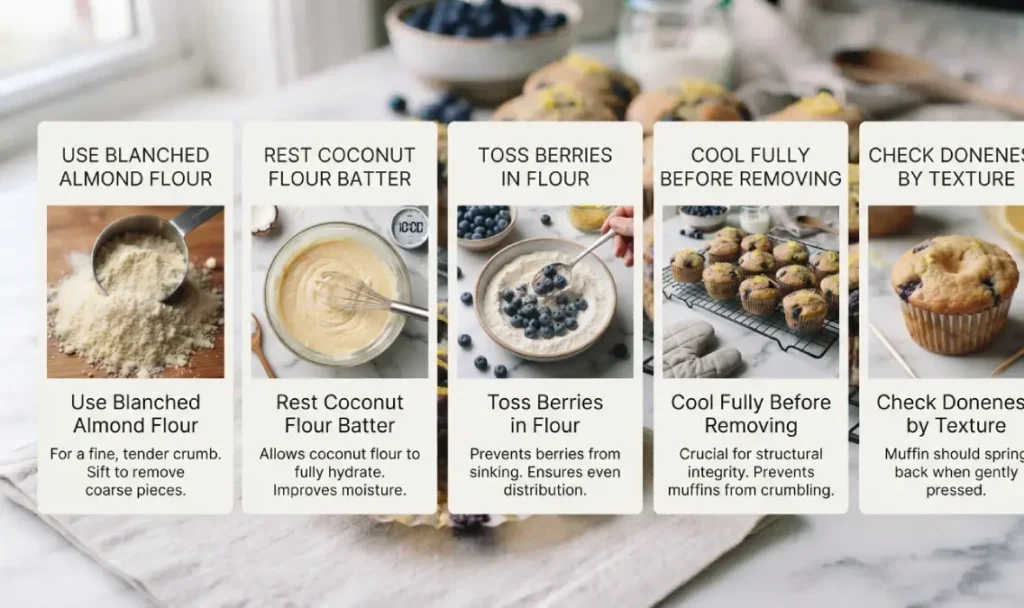
- Use blanched almond flour, not almond meal. Almond meal is coarser and produces a grainier, denser muffin that doesn’t hold together as well.
- Don’t skip the resting time for coconut flour batter. Letting it sit for even 2–3 minutes allows the flour to fully absorb the eggs and fat, which prevents the muffins from being too wet inside.
- Toss blueberries in a little almond flour before folding them in. This helps prevent them from sinking to the bottom during baking.
- Let muffins cool fully in the tin before removing. Keto muffins are more fragile when warm than traditional ones, and they firm up significantly as they cool.
- Check doneness by texture, not just color. Almond flour can brown quickly on top while the center is still underdone, so check with a toothpick before pulling them out.
Frequently Asked Questions
Q: How many net carbs are in a typical keto blueberry muffin?
It varies by recipe and sweetener, but most almond flour versions land between 3–5 grams of net carbs per muffin, depending on size and blueberry count.
Q: Can I use frozen blueberries instead of fresh?
Yes, just don’t thaw them first and toss them in a small amount of almond flour to limit bleeding into the batter.
Q: Why did my keto muffins come out eggy?
This usually happens when there are too many eggs relative to flour, which is a common issue with coconut flour recipes specifically. Stick closely to the ratio in the recipe above.
Q: Can I substitute allulose for erythritol in these recipes?
Yes, allulose works well as a substitute and tends to produce slightly softer muffins that brown more like traditional baked goods.
Q: How do I store keto blueberry muffins?
They keep well in an airtight container in the fridge for up to 5 days, or can be frozen individually for up to 2 months.
Q: Can I make these nut-free?
The coconut flour recipe above is naturally nut-free and works well as the base for any of the flavored variations, though you’ll need to adjust egg and fat ratios if swapping flour types.
My Expert Opinion
After years of developing low-carb baking recipes professionally, my honest take is that most people new to keto baking give up after one attempt with coconut flour without realizing the almond flour version is dramatically more forgiving and almost always produces a better result on the first try. If you’re new to this, start there. The other thing I’d push back on is the instinct to reduce eggs in coconut flour recipes to make them “less eggy” — that almost always makes the texture worse, not better. The solution to an eggy muffin is usually more fat and slightly more sweetener to balance flavor, not fewer eggs. The cream cheese swirl version is the one I’d serve to someone who isn’t keto at all, because it genuinely competes with a bakery muffin on its own terms.
Conclusion
Keto blueberry muffins don’t have to mean dense, crumbly, or eggy — with the right flour choice and ratios, they can be genuinely satisfying enough to make on a regular basis whether you’re strictly keto or just cutting back on refined flour and sugar. Whether you start with the classic almond flour version or go straight for the cream cheese swirl, each ingredients table above gives you exactly what you need for a muffin worth making again.