Table of Contents
- Introduction
- Why Cottage Cheese Mac and Cheese Actually Works
- Ingredients
- Recipe 1: Stovetop Cottage Cheese Mac and Cheese
- Recipe 2: Baked Cottage Cheese Mac and Cheese
- The Secret to a Perfectly Smooth Cottage Cheese Pasta Sauce
- Delicious Variations to Try
- Expert’s Opinion
- Frequently Asked Questions
- Conclusion
Cottage cheese mac and cheese is the recipe that genuinely surprised the entire internet — and for very good reason. A humble tub of cottage cheese, when blended into a silky smooth sauce and combined with sharp cheddar and perfectly cooked pasta, produces a creamy mac and cheese with cottage cheese that is indistinguishable from the full-fat, heavy cream version — except it packs nearly double the protein per serving. If you’ve been searching for a high protein mac and cheese that doesn’t taste like a compromise, your search ends here. This guide gives you two foolproof recipes, the science behind why it works, and every tip you need to make the creamiest, most satisfying healthy mac and cheese of your life.
Why Cottage Cheese Mac and Cheese Actually Works
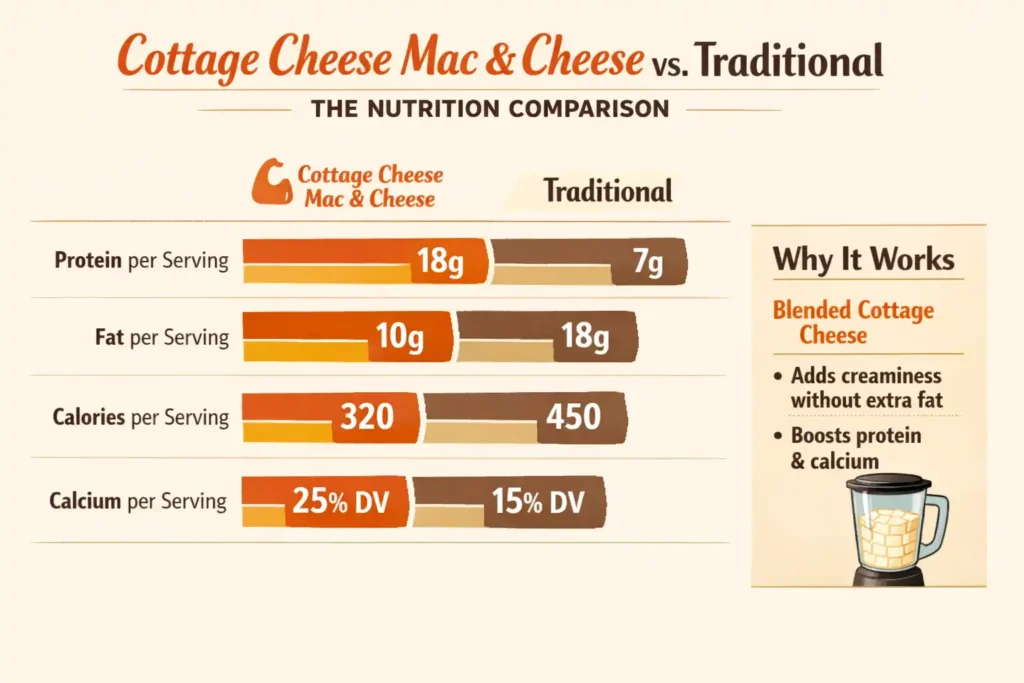
The idea of cottage cheese in mac and cheese sounds unusual — until you understand what happens when you blend it. Raw cottage cheese has a lumpy, mild, slightly tangy character that doesn’t scream “pasta sauce.” But blended cottage cheese transforms completely — it becomes a smooth, creamy, neutral base that mimics the richness of heavy cream or béchamel with a fraction of the fat and dramatically more protein.
- Extraordinary protein content: A half-cup of cottage cheese contains approximately 14g of protein — making this protein packed mac and cheese deliver 25–30g of protein per serving versus 10–12g in traditional versions.
- Lower in fat: This low fat mac and cheese uses cottage cheese instead of butter, heavy cream, and excess cheese — significantly reducing saturated fat without sacrificing creaminess.
- Genuinely creamy texture: Blended cottage cheese creates a cottage cheese pasta sauce that is silky, smooth, and rich — exactly what great mac and cheese demands.
- Budget friendly: Cottage cheese costs less than heavy cream and produces more sauce volume per dollar.
- Naturally high in calcium: The combination of cottage cheese and cheddar makes this one of the most calcium-dense pasta dishes you can make.
According to Healthline’s comprehensive nutrition profile of cottage cheese, it’s one of the highest protein, lowest calorie dairy products available — making it an ideal base for healthy comfort food recipes. Want more high-protein dinner ideas? Check out our guide on high-protein dinner recipes that don’t compromise on flavor.
Ingredients
Here’s everything you need for both the stovetop and baked versions of cottage cheese mac and cheese:
Ingredients Table — Stovetop Version
| Ingredient | Quantity | Notes |
|---|---|---|
| Elbow macaroni or cavatappi | 12oz (340g) | Cavatappi holds sauce better |
| Full-fat cottage cheese | 1½ cups (340g) | Full-fat blends smoother |
| Sharp cheddar, shredded | 1½ cups | Freshly shredded — not pre-bagged |
| Parmesan, grated | ¼ cup | Adds savory depth |
| Whole milk | ½ cup (120ml) | Adjust for sauce consistency |
| Dijon mustard | 1 tsp | Secret flavor enhancer |
| Garlic powder | ½ tsp | — |
| Onion powder | ½ tsp | — |
| Smoked paprika | ¼ tsp | For color and subtle smokiness |
| Salt and black pepper | To taste | Season generously |
| Pasta cooking water | ¼ cup reserved | For sauce consistency |
Ingredients Table — Additional for Baked Version
| Ingredient | Quantity | Notes |
|---|---|---|
| Extra sharp cheddar, shredded | ½ cup | For topping |
| Panko breadcrumbs | ½ cup | For crispy topping |
| Butter, melted | 1 tbsp | Toss with breadcrumbs |
| Fresh thyme or parsley | 1 tsp | Optional garnish |
Recipe 1: Stovetop Cottage Cheese Mac and Cheese
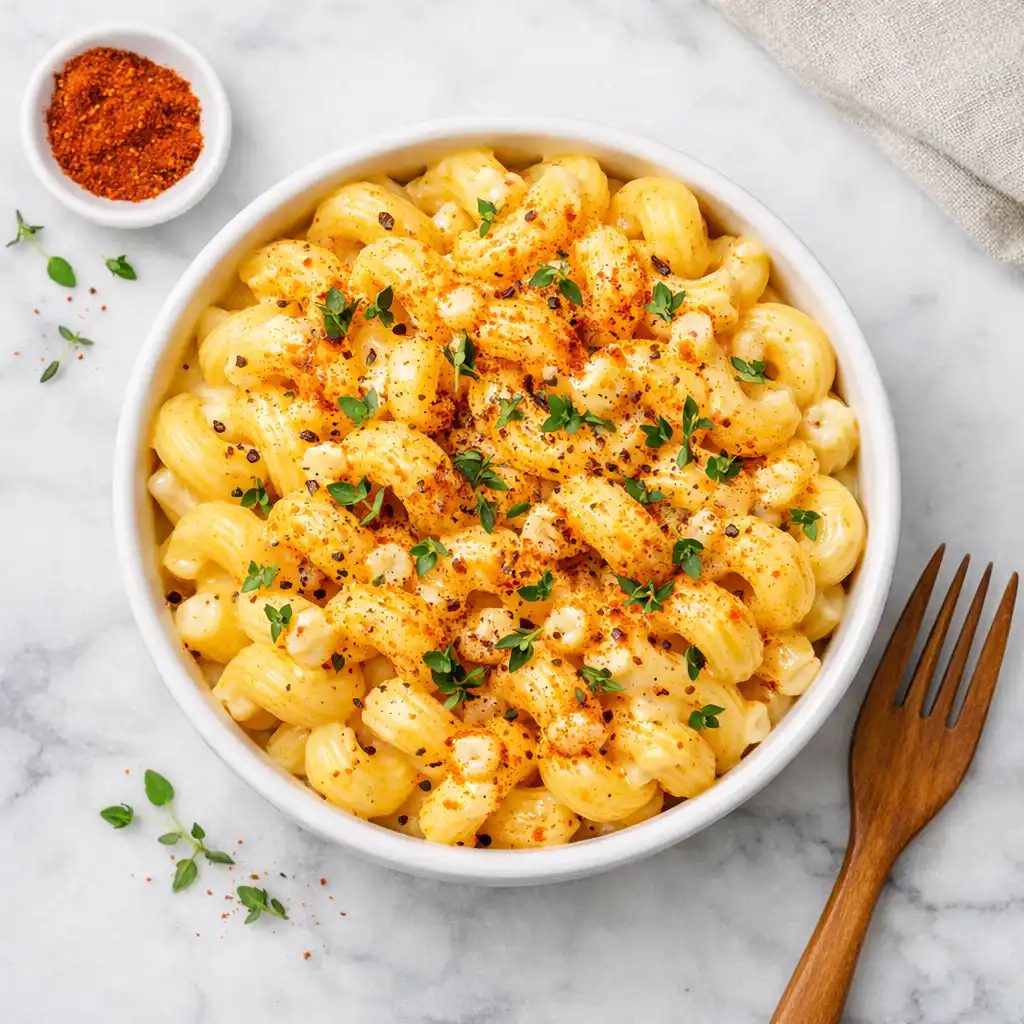
This cottage cheese mac and cheese stovetop version is the weeknight champion — ready in 20 minutes, one pot, and so creamy that nobody will ever guess the secret ingredient. It’s the easy healthy mac and cheese that earns permanent rotation status from the very first bite.
Step-by-Step Instructions
- Cook pasta in heavily salted boiling water until al dente. Reserve ¼ cup pasta water before draining. Set aside.
- Blend the cottage cheese sauce: Add cottage cheese, milk, dijon mustard, garlic powder, onion powder, smoked paprika, salt, and pepper to a blender. Blend on high for 60 seconds until completely smooth and creamy — no lumps whatsoever. This step is non-negotiable.
- Pour blended cottage cheese sauce into a large saucepan over medium-low heat. Warm gently, stirring constantly — do not boil.
- Add shredded cheddar and parmesan in three additions, stirring until completely melted and smooth between each addition.
- Add drained pasta and toss to coat. Add pasta water one tablespoon at a time until sauce reaches your desired consistency.
- Taste and adjust seasoning. Serve immediately topped with extra smoked paprika and black pepper.
Serves: 4 | Total time: 20 minutes | Protein per serving: ~28g
Recipe 2: Baked Cottage Cheese Mac and Cheese
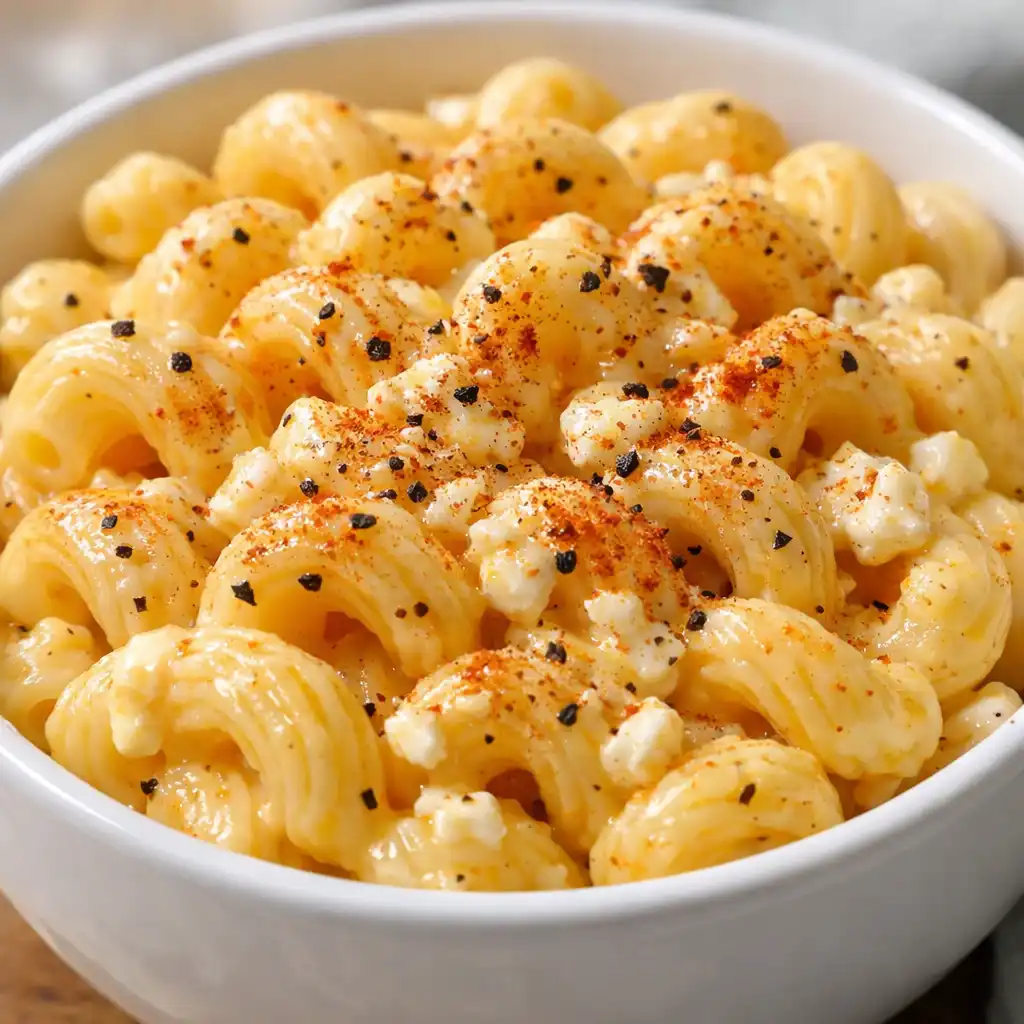
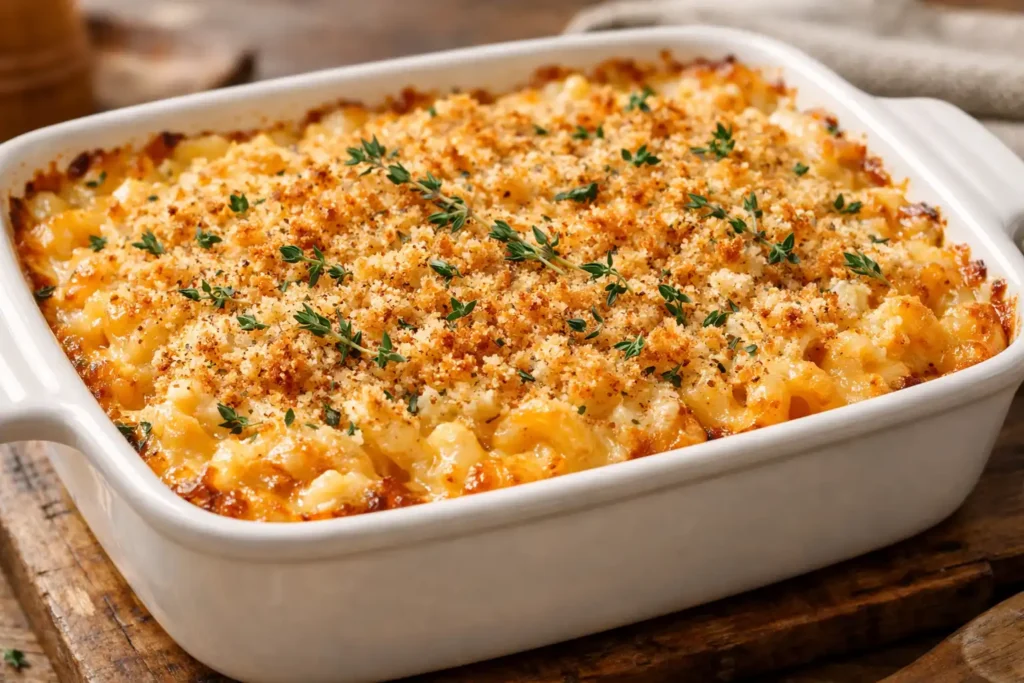
This baked cottage cheese mac and cheese takes everything wonderful about the stovetop version and elevates it with a golden, crispy breadcrumb topping and bubbling, caramelized cheese edges that make it the ultimate comfort food for feeding a crowd or a special family dinner.
Step-by-Step Instructions
- Preheat oven to 375°F (190°C). Grease a 9×13 inch baking dish.
- Prepare the stovetop cottage cheese mac and cheese exactly as above, but slightly undercook the pasta (1 minute shy of al dente) and make the sauce slightly looser than you think necessary — it thickens significantly during baking.
- Pour mac and cheese into the prepared baking dish and spread evenly.
- Mix panko breadcrumbs with melted butter and scatter evenly over the top. Sprinkle extra sharp cheddar over the breadcrumbs.
- Bake uncovered for 20–25 minutes until the top is golden and crispy and the edges are bubbling.
- Rest for 5 minutes before serving. Garnish with fresh thyme or parsley.
Serves: 6–8 | Total time: 45 minutes | Protein per serving: ~24g
The Secret to a Perfectly Smooth Cottage Cheese Pasta Sauce
The difference between a lumpy, disappointing cottage cheese sauce and a silky, restaurant-quality one comes down to three non-negotiable principles:
1. Always Blend — Never Stir
Stirring cottage cheese into hot pasta produces a grainy, uneven texture. Blending is mandatory. A high-speed blender produces the smoothest result, but an immersion blender or food processor both work well. Blend for a full 60 seconds minimum until the texture is completely uniform.
2. Warm Gently — Never Boil
High heat causes cottage cheese proteins to seize and separate, producing a grainy sauce. Always heat your cottage cheese pasta sauce over medium-low heat, stirring constantly. The moment you see the first gentle bubbles, reduce heat immediately.
3. Always Shred Your Own Cheese
Pre-shredded cheese contains anti-caking agents (usually potato starch) that prevent smooth melting and produce a grainy sauce. Always shred cheddar fresh from a block — it melts instantly into the cottage cheese base for a perfectly smooth, glossy sauce.
Delicious Variations to Try
Buffalo Chicken Cottage Cheese Mac
Add 1 cup shredded rotisserie chicken and 3 tbsp buffalo sauce to the finished mac and cheese. Top with crumbled blue cheese and sliced green onions. Spicy, satisfying, and even higher in protein.
Spinach and Artichoke Mac
Fold in 2 cups wilted baby spinach and ½ cup chopped artichoke hearts before serving. The veggie additions complement the creamy cottage cheese sauce beautifully and add fiber and micronutrients.
Truffle Cottage Cheese Mac
Add ½ tsp truffle oil and substitute gruyère for half the cheddar. Finish with freshly grated parmesan and cracked black pepper. An elevated, dinner-party worthy version of this healthy mac and cheese.
My Expert Opinion on Cottage Cheese Mac and Cheese
Here’s what I want every skeptic to understand about cottage cheese mac and cheese: the blending step is not optional — it’s the entire recipe. I’ve tested this dish with stirred cottage cheese versus blended cottage cheese dozens of times, and the difference is categorical. Stirred produces a lumpy, slightly sour-tasting sauce that announces itself as a health substitute. Blended produces a sauce so smooth, rich, and genuinely delicious that I’ve served it to food professionals without revealing the ingredient — and not one person identified the cottage cheese. The blender is what makes this recipe work, and skipping it is the only way to fail.
My other strong recommendation? Use full-fat cottage cheese, not low-fat or fat-free. I understand the instinct to go as low-fat as possible in a “healthy” recipe, but full-fat cottage cheese blends significantly smoother, produces a creamier sauce, and tastes dramatically better than its reduced-fat counterparts. The calorie difference per serving is modest — roughly 30–40 calories — and the quality difference is enormous. In a recipe where the cottage cheese IS the sauce, using the best version available is always the right decision.
Frequently Asked Questions
Q: Can you taste the cottage cheese in this mac and cheese?
When blended properly, no — you cannot taste the cottage cheese. Blending neutralizes the cottage cheese’s characteristic mild tang and transforms it into a neutral, creamy base that lets the cheddar flavor take center stage. The finished dish tastes like rich, creamy, classic mac and cheese — not like a health food substitute. This is consistently the most surprising thing about this recipe for first-time makers.
Q: What cottage cheese is best for mac and cheese?
Full-fat small-curd cottage cheese produces the smoothest, creamiest results. Small curd blends more easily than large curd, and full-fat provides the richness needed for a satisfying sauce. Good Culture, Kalona Supernatural, and Nancy’s are consistently high-quality brands that blend beautifully. Avoid fat-free versions — they produce a watery, less satisfying sauce.
Q: How do I store and reheat cottage cheese mac and cheese?
Store leftovers covered in the refrigerator for up to 3 days. The sauce thickens considerably as it chills. To reheat, add a splash of milk (2–3 tbsp per serving) and warm gently over medium-low heat, stirring frequently, until creamy again. Never microwave on high — it makes the sauce grainy. A low microwave setting with frequent stirring works in a pinch.
Q: Can I make cottage cheese mac and cheese gluten-free?
Yes — simply substitute your favorite gluten-free pasta (chickpea pasta actually increases the protein content even further) and use gluten-free panko breadcrumbs for the baked version. The cottage cheese sauce itself is naturally gluten-free. For more guidance on high-protein healthy eating, visit Healthline’s comprehensive guide to high-protein foods.
Conclusion
Cottage cheese mac and cheese is the rare recipe that delivers on every promise — genuinely creamy, deeply satisfying, high in protein, and completely impossible to distinguish from the full-fat original when made correctly. With the stovetop version ready in 20 minutes and the baked version delivering a golden, crispy showpiece, you now have a healthy mac and cheese for every occasion in your repertoire.
Make the stovetop version tonight — blend the cottage cheese completely, shred your own cheddar, warm it gently, and taste what happens. The result will convert even the most committed mac and cheese traditionalists in your household. Explore more high-protein comfort food recipes in our collection of high-protein comfort food recipes that never taste like health food.