Tuna and cottage cheese is one of those ingredient combinations that sounds unlikely until you actually try it — and then it becomes a go-to for anyone who needs a fast, high-protein meal with very little effort. Both ingredients are inexpensive, shelf-stable or fridge-stable for long stretches, and genuinely high in protein without requiring any cooking. Below are five complete recipes, each with its own ingredients table, covering a classic no-cook mix, a stuffed avocado, a loaded baked potato, a savory bowl, and one more indulgent melt variation for when you want something warm.
Why Tuna and Cottage Cheese Work So Well Together
The combination works for two practical reasons: flavor and texture. Cottage cheese is mild and creamy, which softens the stronger flavor of canned tuna without masking it entirely, similar to how mixing tuna with mayonnaise functions but with a noticeably higher protein-to-fat ratio. Canned tuna is already one of the most protein-dense foods available by weight, and cottage cheese adds another meaningful layer on top of that — making the combination one of the more efficient high-protein pairings you can build a meal around. The documented role of dietary protein in supporting muscle and satiety is part of why this combination shows up so frequently in fitness and nutrition circles, though it works just as well as a practical everyday lunch regardless of whether you’re tracking macros.
What to Look for When Choosing Your Tuna and Cottage Cheese
A few decisions at the store make a noticeable difference in both flavor and nutrition:
- Tuna packed in water vs. oil: Water-packed tuna has fewer calories and a cleaner flavor that tends to mix more neutrally with cottage cheese; oil-packed has a richer taste but contributes more fat.
- Full-fat vs. low-fat cottage cheese: Full-fat produces a creamier, more satisfying mixture; low-fat keeps the calorie count lower while still delivering the same protein content.
- Small curd vs. large curd: Small curd blends more smoothly into the tuna mixture; large curd gives a chunkier texture that some people prefer for bowls and loaded recipes.
- Sodium content: Both canned tuna and cottage cheese can be relatively high in sodium, so if that’s a concern, rinsing the tuna under cold water and choosing a lower-sodium cottage cheese brand helps significantly.
For a broader look at how these two ingredients fit into high-protein eating patterns, see our high-protein meal prep guide, or this overview of common high-protein foods and how they compare.
Classic Tuna and Cottage Cheese Recipes
These two are the most straightforward starting points — one a simple no-cook mix, one built into a stuffed avocado.
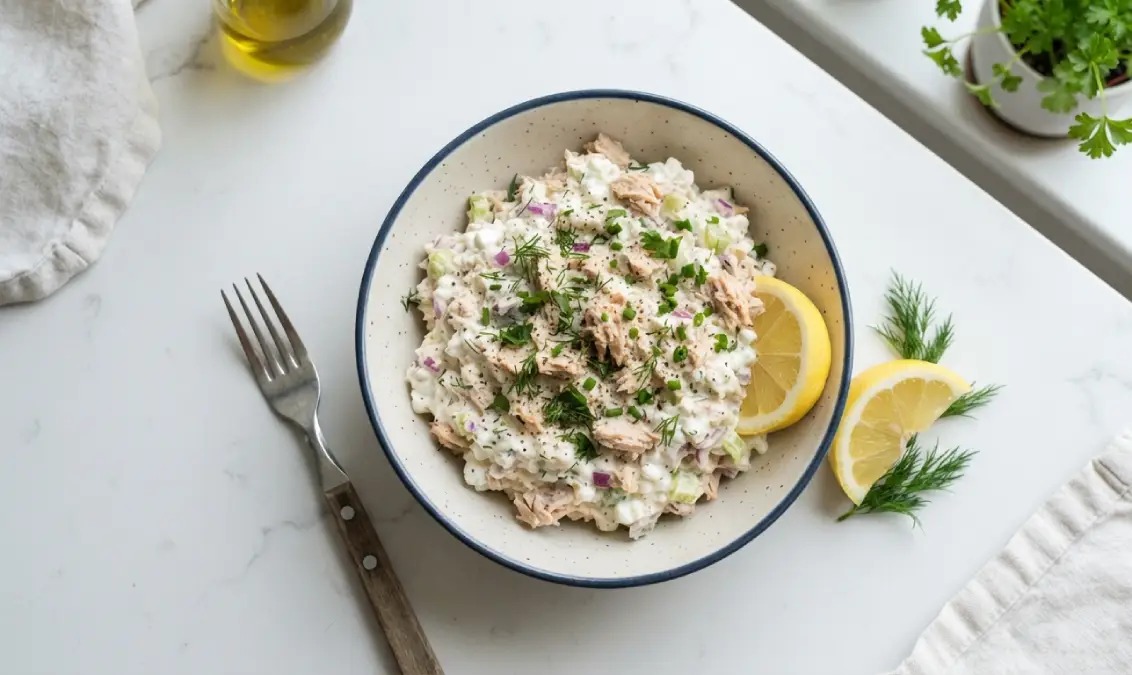
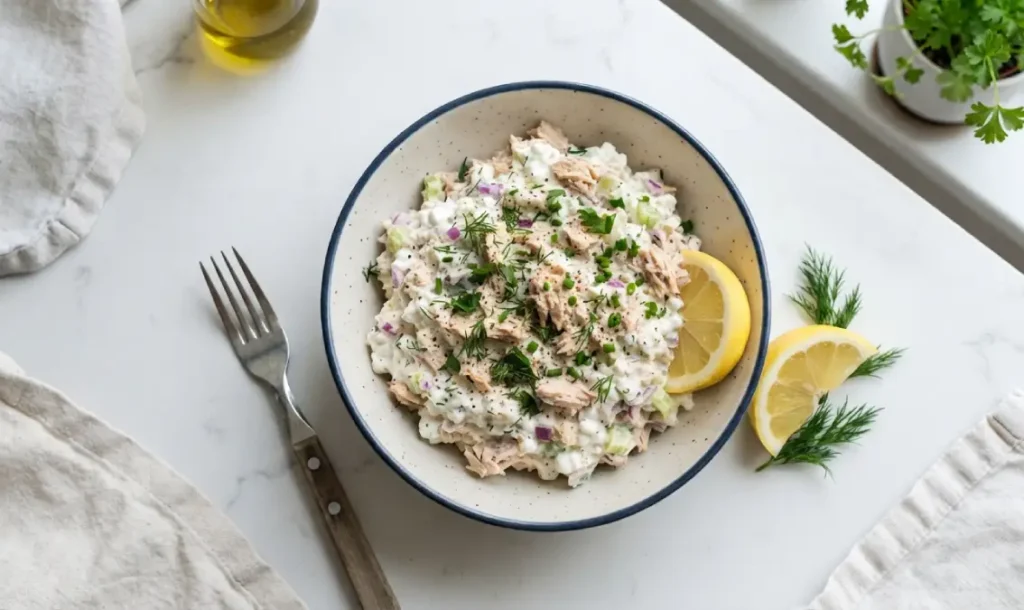
Classic Tuna and Cottage Cheese Mix
| Ingredient | Amount |
|---|---|
| Canned tuna, drained | 1 can (5 oz) |
| Cottage cheese | 1/2 cup |
| Celery, finely diced | 2 stalks |
| Red onion, finely diced | 2 tbsp |
| Dijon mustard | 1 tsp |
| Lemon juice | 1 tsp |
| Salt and pepper | To taste |
- Drain tuna thoroughly and flake into a bowl.
- Add cottage cheese, celery, red onion, mustard, and lemon juice, stirring until well combined.
- Season with salt and pepper, then serve immediately on crackers, lettuce wraps, or toast.
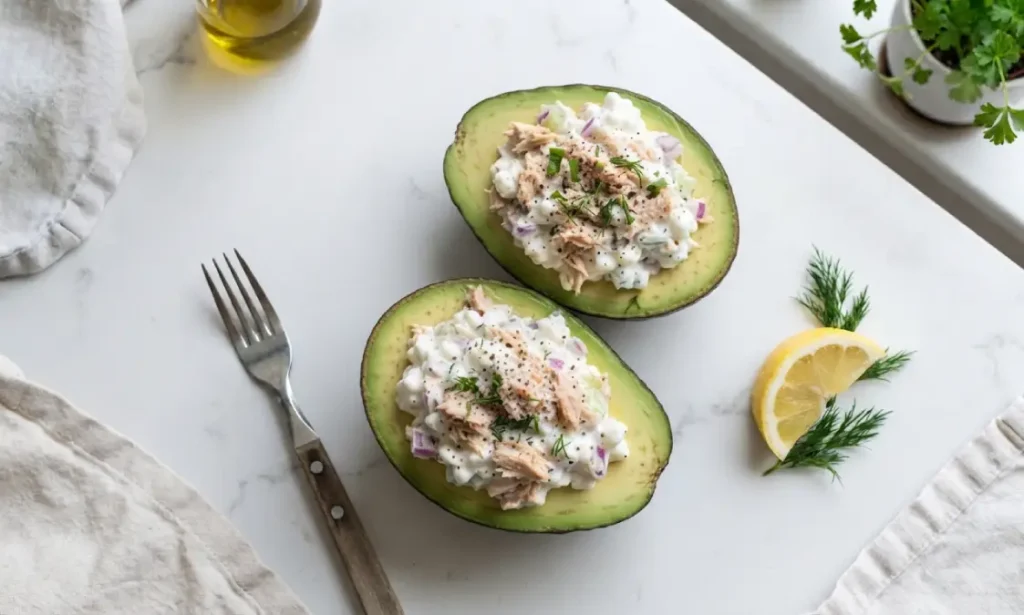
Tuna and Cottage Cheese Stuffed Avocado
| Ingredient | Amount |
|---|---|
| Canned tuna, drained | 1 can (5 oz) |
| Cottage cheese | 1/3 cup |
| Ripe avocado, halved and pitted | 1 large |
| Lemon juice | 1 tsp |
| Red pepper flakes (optional) | Pinch |
| Salt and pepper | To taste |
- Mix drained tuna with cottage cheese, lemon juice, salt, and pepper until combined.
- Scoop a little extra avocado from each half to widen the well, then dice and fold it into the tuna mixture.
- Pile the tuna mixture into each avocado half and serve immediately with a pinch of red pepper flakes on top.
Heartier Tuna and Cottage Cheese Meals
These two recipes turn the same basic combination into a more substantial meal. For more high-protein dinner ideas, see our high-protein meal prep guide.
Tuna and Cottage Cheese Loaded Baked Potato
| Ingredient | Amount |
|---|---|
| Russet potatoes | 2 large |
| Canned tuna, drained | 1 can (5 oz) |
| Cottage cheese | 1/2 cup |
| Green onions, sliced | 2 tbsp |
| Garlic powder | 1/2 tsp |
| Salt and pepper | To taste |
- Bake potatoes at 400°F for 50–60 minutes, until a fork pierces easily through the center.
- Mix drained tuna with cottage cheese, green onions, garlic powder, salt, and pepper.
- Split baked potatoes, fluff the interior, and pile the tuna mixture generously on top before serving.
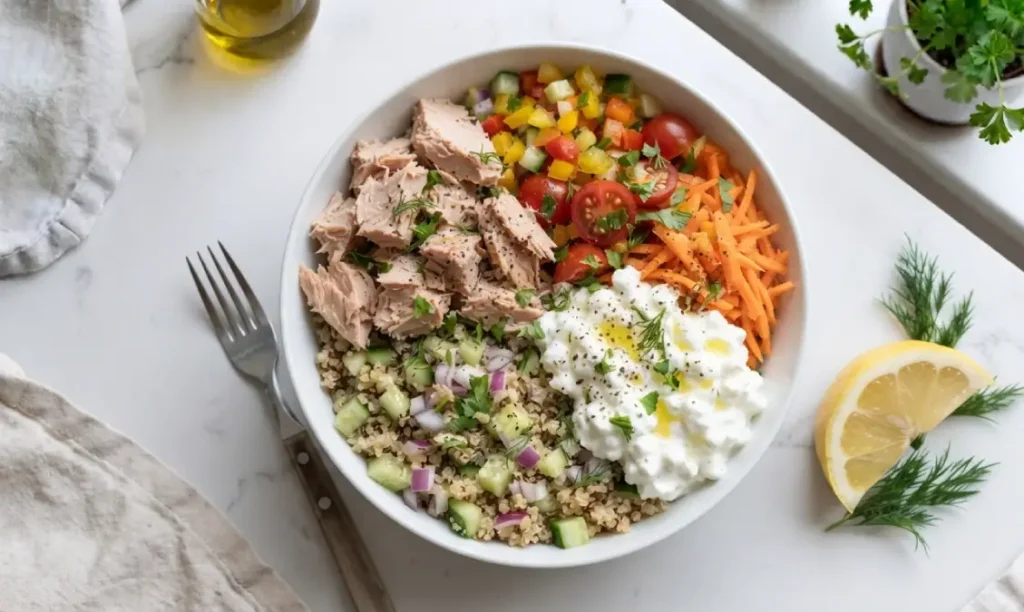
Tuna Cottage Cheese Protein Bowl
| Ingredient | Amount |
|---|---|
| Canned tuna, drained | 1 can (5 oz) |
| Cottage cheese | 1/2 cup |
| Cooked quinoa or brown rice | 1/2 cup |
| Cherry tomatoes, halved | 1/2 cup |
| Cucumber, diced | 1/2 cup |
| Lemon juice | 1 tbsp |
| Olive oil | 1 tbsp |
| Salt and pepper | To taste |
- Arrange cooked quinoa or rice in a bowl as the base.
- Top with drained tuna, cottage cheese, cherry tomatoes, and cucumber.
- Drizzle with lemon juice and olive oil, season with salt and pepper, and serve immediately.
A Warm Tuna and Cottage Cheese Recipe Worth Making
Tuna Cottage Cheese Melt
| Ingredient | Amount |
|---|---|
| Canned tuna, drained | 1 can (5 oz) |
| Cottage cheese | 1/3 cup |
| Whole grain bread | 2 slices |
| Cheddar cheese, shredded | 1/4 cup |
| Dijon mustard | 1 tsp |
| Red onion, finely diced | 1 tbsp |
| Salt and pepper | To taste |
- Mix drained tuna with cottage cheese, mustard, red onion, salt, and pepper until well combined.
- Spread the mixture onto bread slices and top with shredded cheddar.
- Broil for 3–4 minutes, until the cheese is melted and bubbling and the edges of the bread are lightly toasted.
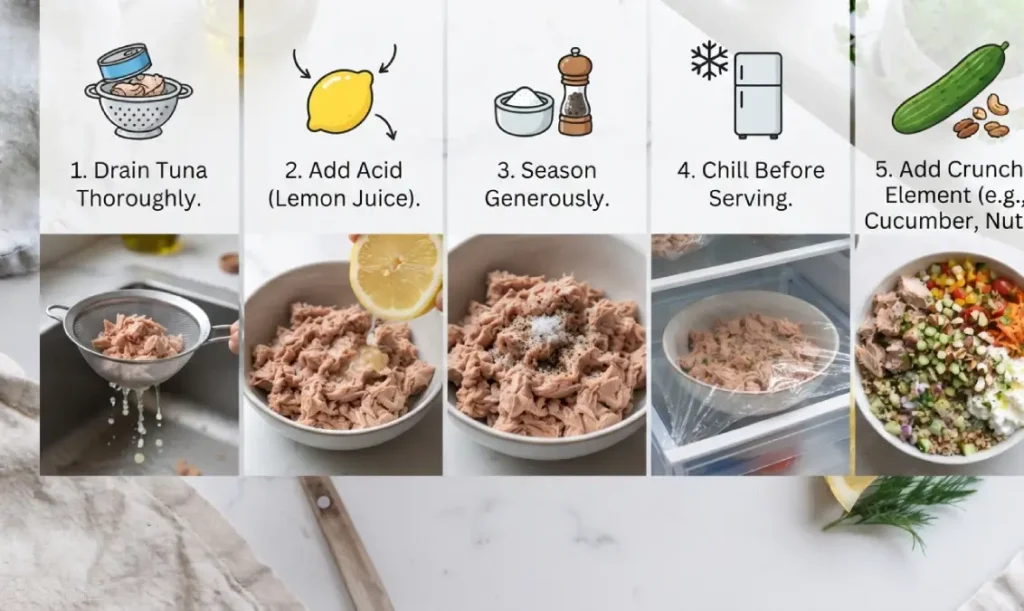
Tips for Making Tuna and Cottage Cheese Taste Its Best
A few small adjustments consistently improve both flavor and texture:
- Drain the tuna thoroughly. Excess liquid from the can makes the mixture watery and dilutes the cottage cheese’s creaminess, so pressing the tuna in the can with the lid before draining helps significantly.
- Add acid. A squeeze of lemon juice or a small splash of white vinegar brightens the flavor of both ingredients and balances the richness of the cottage cheese.
- Season generously. Cottage cheese is mild enough that both ingredients need more salt and pepper than you might expect to taste properly seasoned.
- Chill before serving when possible. A short rest in the fridge allows the flavors to meld, which improves the taste of the classic mix noticeably.
- Add texture with a crunchy element. Celery, cucumber, chopped pickles, or even crackers on the side give the mixture a textural contrast that makes it more satisfying to eat.
Frequently Asked Questions
Q: How much protein does a typical tuna and cottage cheese meal have?
A single-can serving of tuna with half a cup of cottage cheese typically delivers somewhere between 35–45 grams of protein combined, depending on the specific brands used.
Q: Does tuna and cottage cheese taste good cold?
Yes — the classic mix and stuffed avocado versions are both best served cold or at room temperature, and the flavors actually improve slightly after a short chill in the fridge.
Q: Can I meal prep these recipes in advance?
The classic mix and protein bowl both keep well in the fridge for up to 2 days; the stuffed avocado is best made fresh since avocado browns quickly once cut.
Q: Is this combination suitable for a low-carb or keto diet?
Yes — both tuna and cottage cheese are very low in carbohydrates; the baked potato and quinoa bowl versions add carbs, but the other three recipes are naturally low-carb.
Q: What can I use instead of cottage cheese if I don’t like the texture?
Blended cottage cheese has a much smoother, creamier consistency that most people find easier to work with — just pulse it in a blender for 20–30 seconds before mixing with the tuna.
Q: How do I reduce the sodium in these recipes?
Rinsing canned tuna under cold water removes a meaningful amount of sodium, and choosing a low-sodium or no-salt-added cottage cheese brand makes an additional difference.
My Expert Opinion
After years of developing high-protein recipes professionally, my honest take is that tuna and cottage cheese is genuinely one of the most underrated combinations in practical everyday eating, and the main thing holding most people back from trying it is the assumption that it will taste like diet food. It doesn’t — especially when seasoned well and paired with something acidic like lemon juice or pickles. My honest recommendation is to blend the cottage cheese smooth before mixing it with tuna if you’re trying this for the first time, since the texture of blended cottage cheese is much closer to a creamy dressing than the chunky version straight from the container. The melt version is the one I’d make for someone skeptical about the combination — warm, cheesy, and satisfying enough that the cottage cheese base becomes completely beside the point.
Conclusion
Tuna and cottage cheese is a combination that delivers on both nutrition and convenience more reliably than almost anything else you can put together from pantry staples in under ten minutes. Whether you start with the classic no-cook mix or build toward the loaded baked potato or warm melt for something more substantial, each ingredients table above gives you exactly what you need for a high-protein meal that holds up in both flavor and staying power.